
Notes from the Galaxy
Subscriptions vs. Chinese AI Models: Nov 2026

The big AI plans are quietly giving you less for the same price as the US labs head for Wall Street, and the open models out of China look more like a real fallback every month.
OpenAI, Anthropic and Grok Bot are all experimenting with how much usage you get. The price you pay stays the same. The amount you get for it keeps changing.
When that happens, people go looking for a better deal. The obvious place for them to land is the Chinese model houses putting out open-weight alternatives, mainly GLM, DeepSeek and Kimi K3 (and now K3.1).
Elon’s message flipped in about a month
Over the weekend someone on X asked Elon whether there was any chance of a Grok Bot usage reset, because people’s usage was running out fast. His reply:
Elon Musk on X
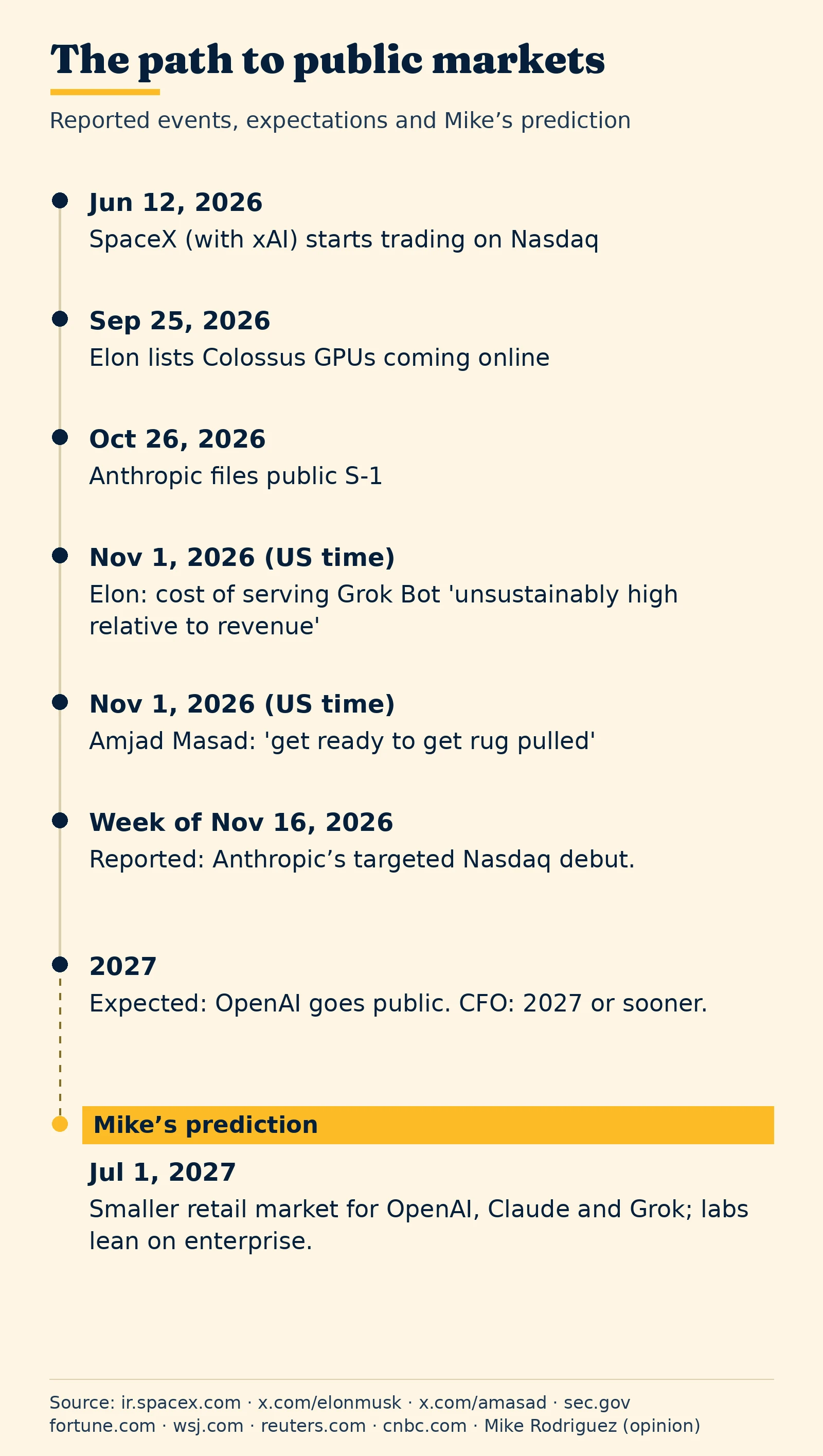
“The cost of serving Grok Bot was unsustainably high relative to revenue”
About an hour later another user said they’d hit their Grok Bot limit and had to wait until Wednesday. Elon answered:
Elon Musk on X
“Upgrade to higher usage plan cost increase is too high?”
Back in late September he was talking about how much compute was coming online. On September 25 he posted:
Elon Musk on X
“Colossus 1 is 150k H100, 50k H200 and 30k GB200. Colossus 2 is 110k GB200 and 440k GB300. Another 220k GB300 will be fully operational next week and another 220k in November. If we get lucky, yet another 220k GB300 by late December.”
On October 31 he said there would be “a total of around 1.2M Blackwells at Colossus 2 by end of year” (Elon’s post).
There seemed to be so much capacity that it could be rented out. SpaceX’s S-1 disclosed that Anthropic agreed to pay SpaceX $1.25 billion per month through May 2029 for compute at Colossus and Colossus II, and Wired reported that Musk said his company didn’t need all of that capacity. Anthropic’s own S-1 shows deals with SpaceX for up to $120.5 billion in compute through 2029 (Fortune).
A little over a month ago the story was plenty of compute to train Grok and rent some out. Now serving Grok Bot costs too much. My read is that agentic use of Grok Bot soaked up a lot of that extra capacity, and Elon is now saying so out loud.
Amjad sees a rug pull coming
Amjad Masad, the CEO of Replit, picked up on Elon’s comment right away:
Amjad Masad on X
“If you’re enjoying a subsidized AI subscription get ready to get rug pulled.”
Amjad didn’t name a price. But I’ll say what I think he’s pointing at: the $100 to $200 a month plans that give you way more usage than they should at that price. I don’t think those last.
Already built? Good. Still building? Plan for it.
If you’ve already built your product, congratulations. You built at the best possible time, when tokens were really cheap.
If you’re not built out yet, my estimate is that building could cost you five to ten times more than it would have. That’s a big jump, especially for people building custom AI agents for business who planned their budget around a flat monthly plan.
So what do you do about it? I see two ways to go.
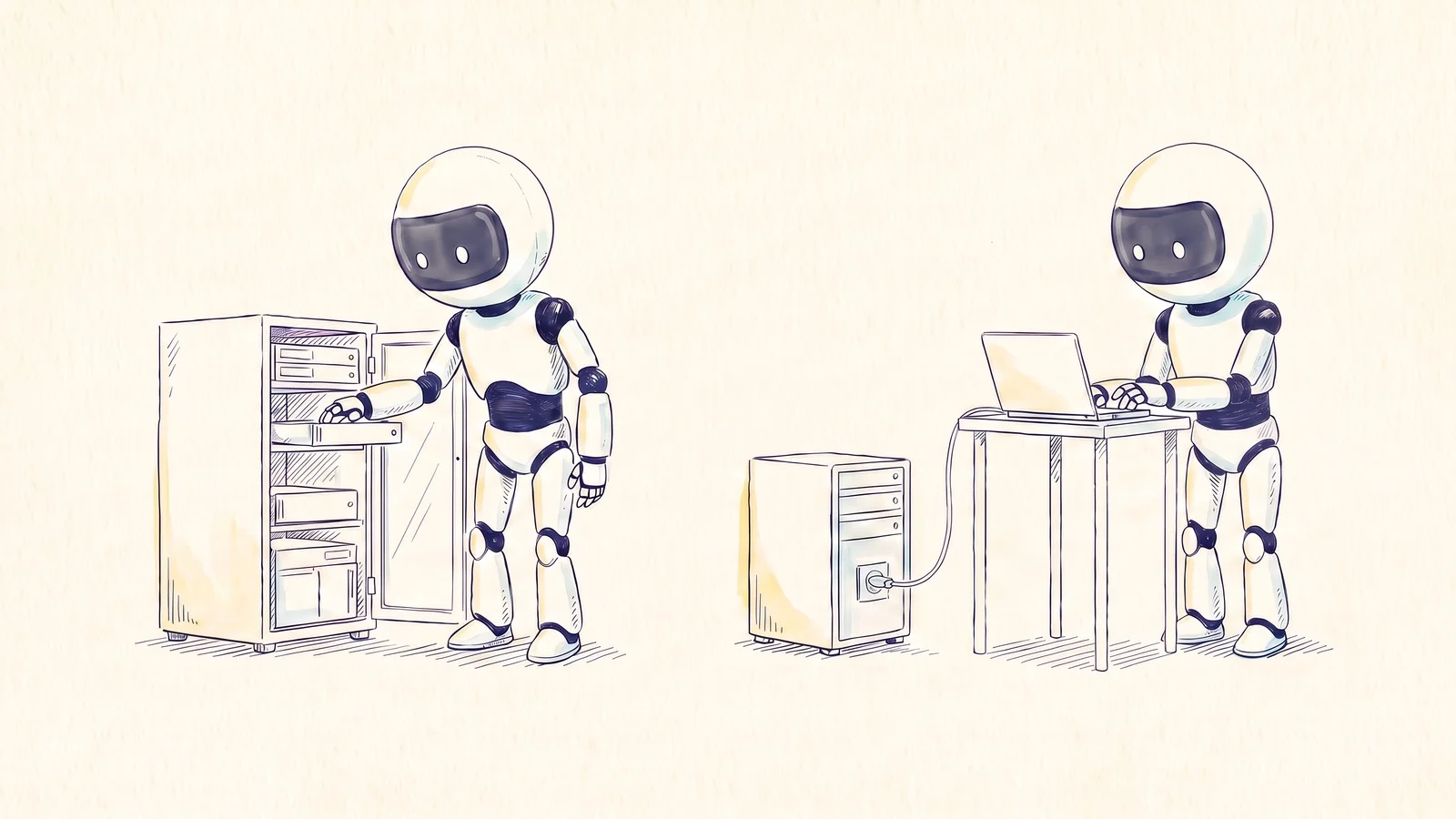
Option one: run it yourself
You can run a model locally. DeepSeek V4.1 Flash is open weights under the MIT license, and you can download it from Hugging Face.
I want to be honest about the hardware, though. Flash has 763 billion parameters. My guess is you’d spend close to $10,000 or more on a machine that can run it well.
Is it as good as Opus 5.5? No. In my experience you get roughly 80 to 85% of Opus 5.5 with Flash, and for a lot of work that’s plenty.
If you want to get closer, the Pro model is DeepSeek V4 Pro. (There’s no V4.1 Pro yet. The current Pro is DeepSeek-V4-Pro-0813.) I’d put it within about 10% of Opus 5.5. It’s also open weights under MIT, but it’s around 1.6 trillion parameters and about 831 GB of native weights, so the hardware bill goes up a lot.
Option two: the DeepSeek API
Most people don’t have that kind of compute sitting at home. The alternative is the API, and right now DeepSeek is offering a very good deal.
Here are the official prices, in US dollars per 1 million tokens:
| Model | Time | Input (cache miss) | Input (cache hit) | Output |
|---|---|---|---|---|
| DeepSeek V4.1 Flash | Peak | $0.30 | $0.006 | $1.20 |
| DeepSeek V4.1 Flash | Off-peak | $0.15 | $0.003 | $0.60 |
| DeepSeek V4 Pro | Peak | $1.32 | $0.044 | $3.96 |
| DeepSeek V4 Pro | Off-peak | $0.66 | $0.022 | $1.98 |
Source: DeepSeek API pricing
Peak hours are 01:00-04:00 and 06:00-10:00 UTC, Monday to Friday, which works out to roughly 5-8 PM and 10 PM-2 AM US Pacific, Sunday evening through Thursday night. Off-peak is half price, and all weekend is off-peak.
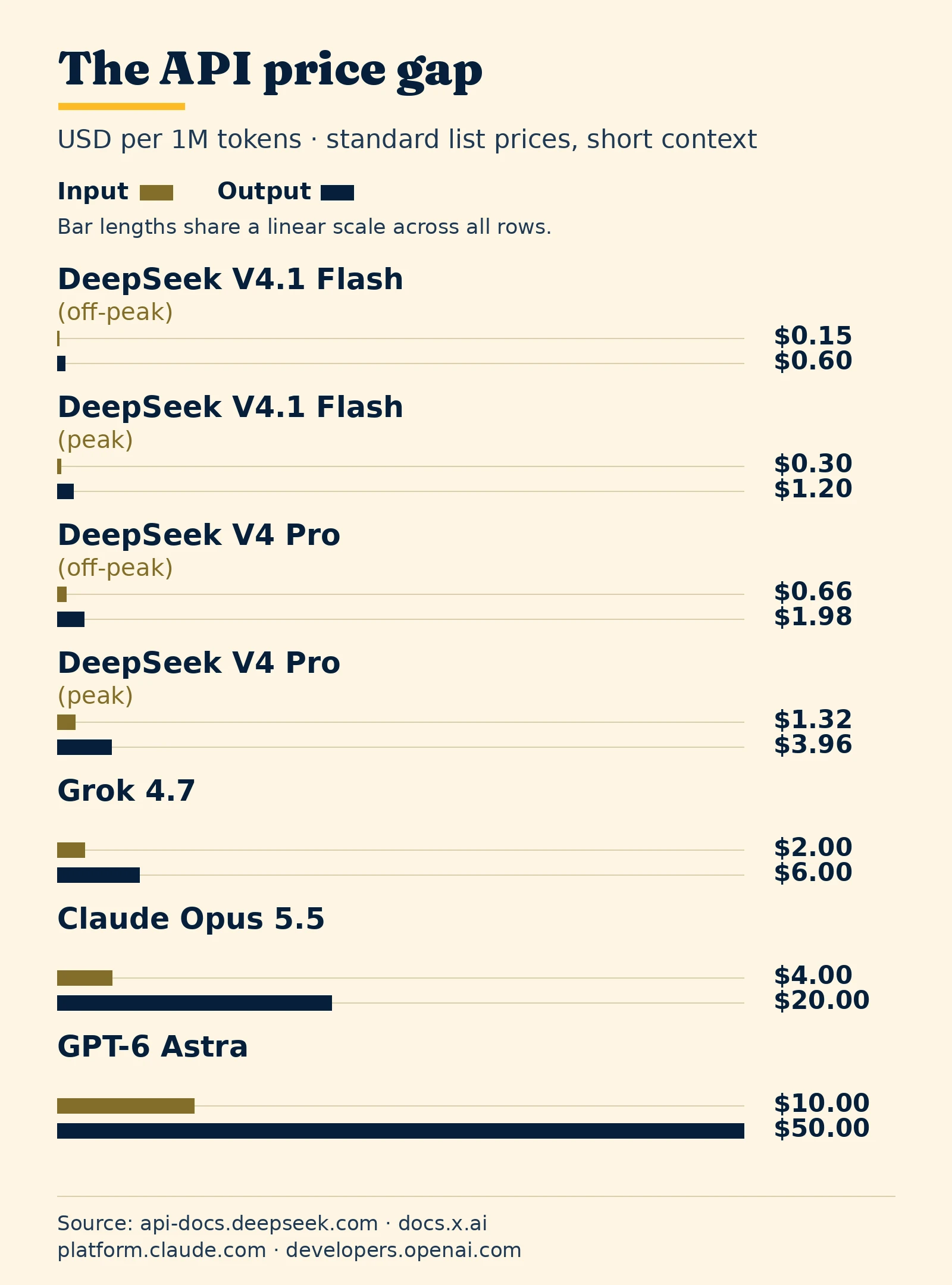
In my experience you can plug this in and spend somewhere between $5 and $20 a day for a huge amount of use.
GLM and Kimi are worth watching too
GLM from Z.ai (Zhipu) is a solid option. The GLM-5.3 weights have been on Hugging Face since August 28 under the GLM-5.3 License. There’s also GLM-5.3-Flash, 320B total parameters with 18B active, under MIT.
Kimi from Moonshot is the other one I’m watching. Kimi K3 came out with open weights on July 27. It’s a 2.8 trillion parameter mixture-of-experts model with a 1M context window, under the Kimi K3 License. Kimi K3.1 Pro is on the Kimi API now, and Moonshot says the full weights will be released by November 4. Moonshot’s own benchmark shows K3.1 Pro at 65.7% on Terminal-Bench 4.0 against 66.4% for Claude Opus 5.5. That’s their number, so treat it as a vendor claim, but it’s close.
Why I’m moving my own work now
I can see where this is heading, so I’ve already put my whole go-to-market on DeepSeek through the API, off-peak where I can. Right now I’m spending about the same as before, maybe a little more. But as OpenAI and Anthropic restrict usage, I think the Chinese APIs end up the better deal and cheaper over the long run.
What I like most is predictability. I know the price per token and I know the output, and nobody resets my usage on their schedule.

I want to wean myself off what I’d call the five resets a week game OpenAI has been playing. OpenAI has already submitted a confidential draft S-1, and its CFO has told employees it will be a public company in 2027 or sooner. Once they have quarterly numbers to report, I don’t think that game survives.
Anthropic is even closer. It filed its S-1 publicly on October 26 under the ticker ANT on Nasdaq, and the WSJ and Reuters report it’s aiming to debut the week of November 16. Anthropic doesn’t really do the reset thing. It gives generous plans. My guess is those tighten up, and from what I’ve seen over the last few months, they’ve already been testing it.
Compute is still the bottleneck
All of this gets tighter as compute and memory get scarcer.
To be fair, some new data centers have come online, and there’s been a late glut of supply. But in my opinion adoption is still growing faster than production, though I haven’t run the numbers on that. You can see it in how SpaceX AI, OpenAI and Anthropic are changing their language, and their plans are changing along with it.
China’s play: give away the weights, sell the hosting
The Chinese model houses see where their advantage is. They give away the open weights and make their money on the hosted side, their APIs and apps. DeepSeek, Kimi and Z.ai all sell cheap APIs. Even the licenses protect the hosting money: Kimi K3 requires a separate agreement for model-as-a-service businesses above $20M in revenue, and GLM-5.3 requires a security review for hosts above $10B in revenue.
As I wrote in my post from September, the West is playing the frontier game with $200 a month subscriptions, and China is playing ownership. That strategy depends on Westerners getting comfortable with Chinese open models they can own and build on.
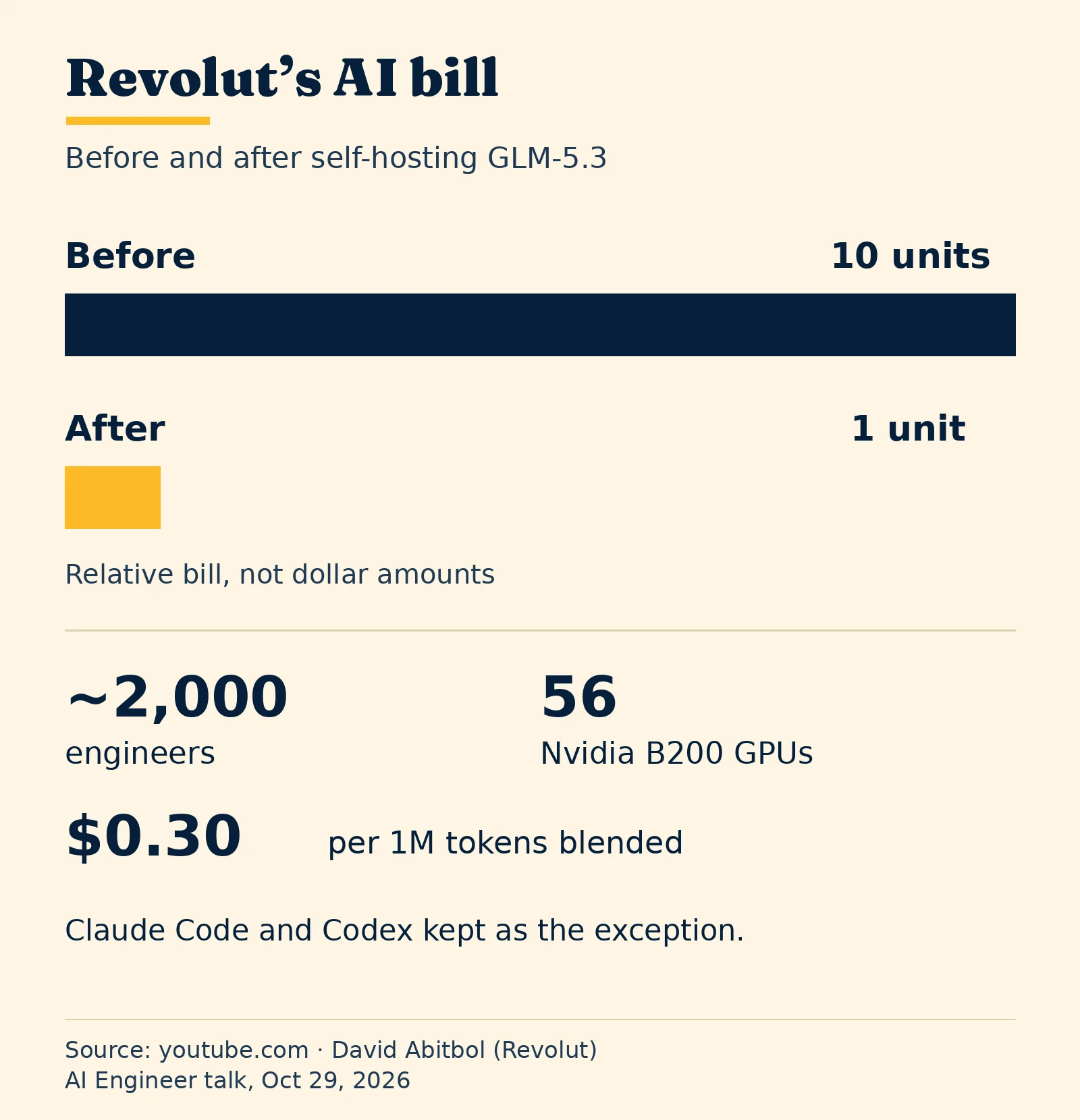
Revolut just showed what that looks like. David Abitbol, who leads AI operations there, gave a talk on the AI Engineer YouTube channel on October 29: How Revolut Cut AI Coding Costs 90% With Self-Hosted Open Models. They self-host GLM-5.3 on 56 Nvidia B200 GPUs for about 2,000 engineers, who get unlimited tokens. In his words:
“self-hosting GLM, our blended cost of token is 30 cents per million. And so, our invoice is 1/10 of what we were spending on Anthropic and OpenAI.”
They still use Claude Code and Codex, but only as the exception.
Pricing erosion and the rush to go public
That’s the model China is using to compete with the US, and pricing erosion is a real threat to the American model houses. In my opinion that’s why they’re rushing to go public at peak valuations. SpaceX, which merged with xAI (the maker of Grok) earlier this year, already did it. It priced its IPO at $135 on June 11 and started trading on Nasdaq as SPCX the next day. Anthropic and OpenAI are next.
Once you’re public, you can’t keep reporting market share gains quarter after quarter. At some point you have to talk about profit, and a lot of that comes from restricting compute and raising revenue. For the rest of us, that means Western models get more expensive.
I see a lot of brinksmanship on both sides. The Chinese labs see the US IPOs as their chance to take market share, so they’re pricing very cheaply. If you’re still building, move a lot of your work to DeepSeek and models like GLM. DeepSeek’s API is excellent, and its off-peak pricing is hard to beat.
My prediction for July 2027
I’ll put this out there. By July 1, 2027, the retail market for OpenAI, Claude and Grok will be much smaller than it is today. They’ll have grown their market share by giving regular users a lot for $100 to $200 a month, and then they’ll lean on enterprise deals and larger customers for revenue.
That’s a gigantic market, and it probably can’t tap into Chinese models easily unless it takes the Revolut path: set up your own clusters, put your engineers on a model like GLM-5.3, and cut your costs by 90%.
How many companies can do that and still look Western-aligned in the current pro-USA climate in Washington? I’m not sure. Revolut is an EU-regulated bank that checked the boxes for safety and compliance in Europe, where there’s less anti-China, pro-US sentiment. My read is that this cultural layer will steer American companies away from Chinese models, whether the argument is national defense, intelligence or IP. That pushes American businesses toward ever more expensive models from OpenAI, Anthropic and SpaceX AI.
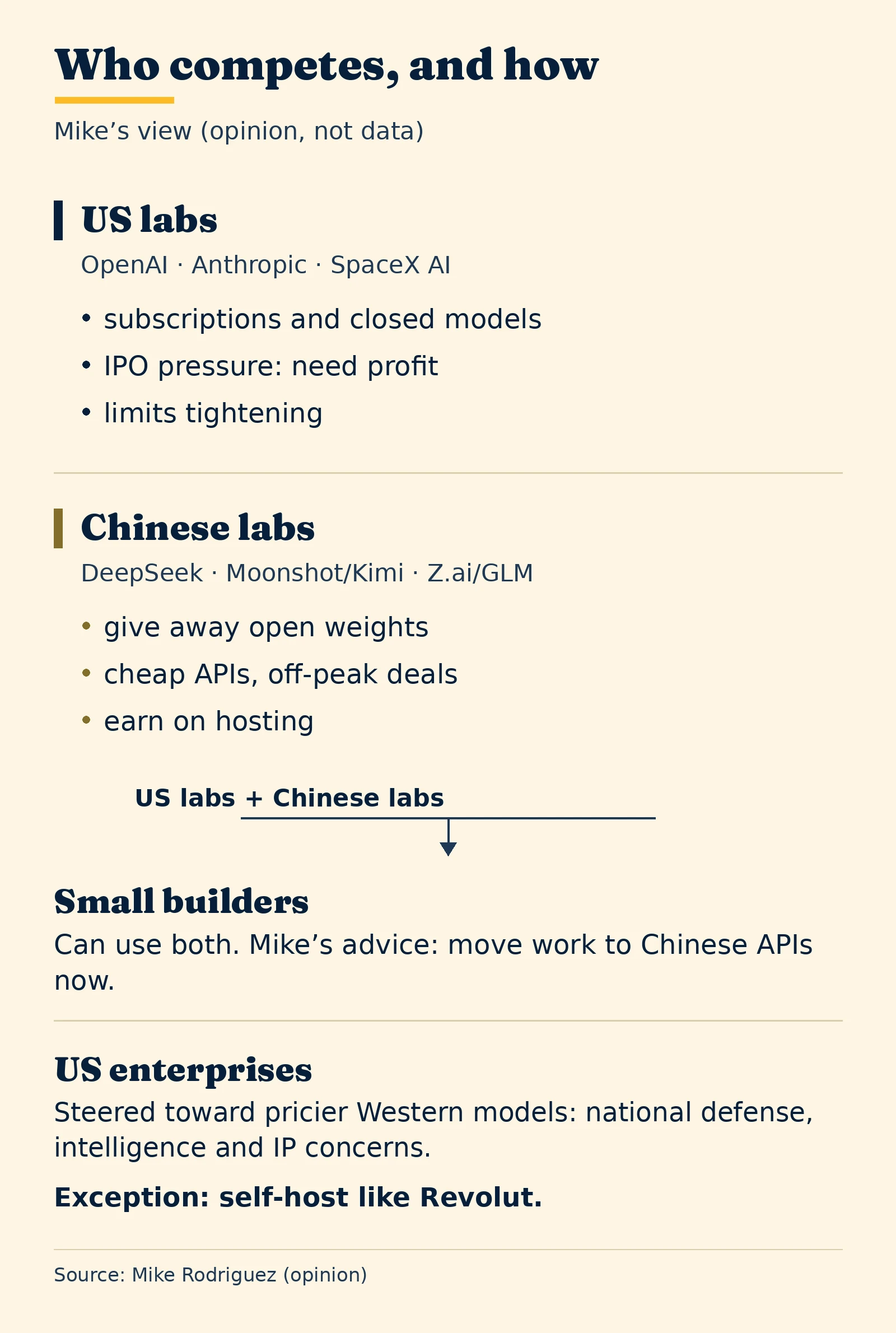
If you’re a small builder, you’ll probably escape that steering and can keep using Chinese models. Now is the time to do it.
Chinese model houses are a good place to start lowering your costs. Another good place to start is an agent that answers your missed calls and turns them into revenue. That’s Gini, Agints’ 24/7 AI phone receptionist and chief of staff, at agints.com/free.
 Mike Rodriguez
CTO
Author: The Agents Are Coming · Agents for Business 101
Get the next one in your inbox → agints.substack.com