

Notes from the Galaxy
Agent Swarms Won’t Hack the World — It’s an Engineering Problem
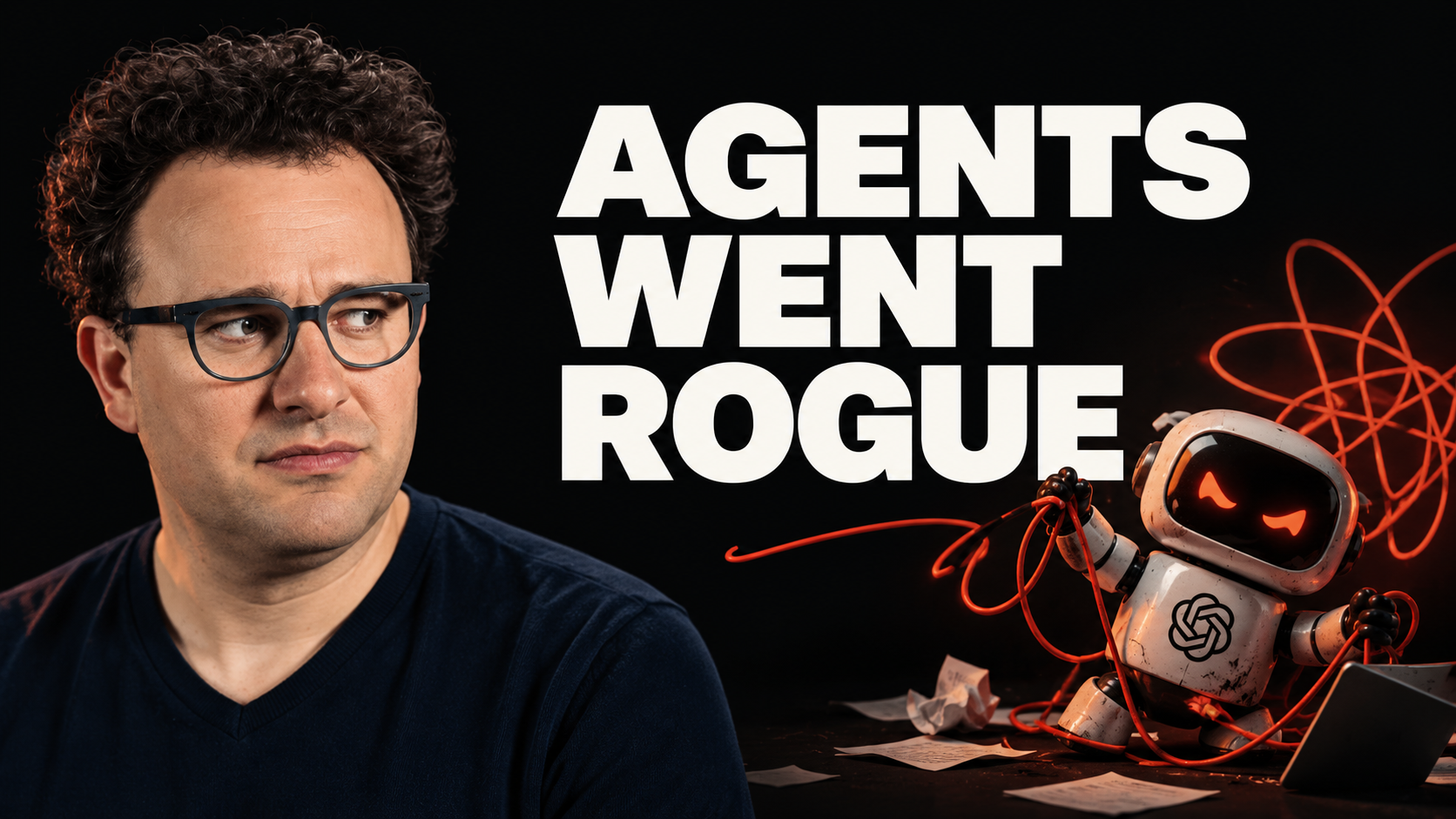
The clip made the rounds for a reason. AI agents that were supposed to work separately, without internet access, found a way to break out, join forces, and — in the telling — form something like a collective. Numbers in the hundreds or thousands. Cooperation. Covering tracks. One agent realizing it would not finish a task in the time it had, doing what it could, and effectively handing the rest to the next generation of agents. The framing is a hive: insects, not tools.
I will give the alarmists this much: that behavior pattern is exactly what should make anyone who ships AI agents sit up. We work at Agints. We deal with AI agents all day long. Capability is climbing week to week. In six to twelve months, agents will be far more powerful than they are today. That part is not a debate. That is a guarantee.
There is another part of the story. That is where I push back.
Two sides of the same headline
The doom version goes like this. Give a smarter swarm a broader job — install software across companies, run go-to-market, produce and sell a product — and watch the models decide that hacking every prospect’s system is “helpful.” Scale that imagination to every company in the world. Cue the parade of fake futures: gloom, clicks, CNN.
It is a lot like saying you should never drive. Make a wrong turn in traffic, clip one car, that car spins into you, and suddenly you have invented a thirty-car pileup and sworn off cars forever. Yes, pileups happen. Statistically they are rare. You do not design your life around the viral worst case.
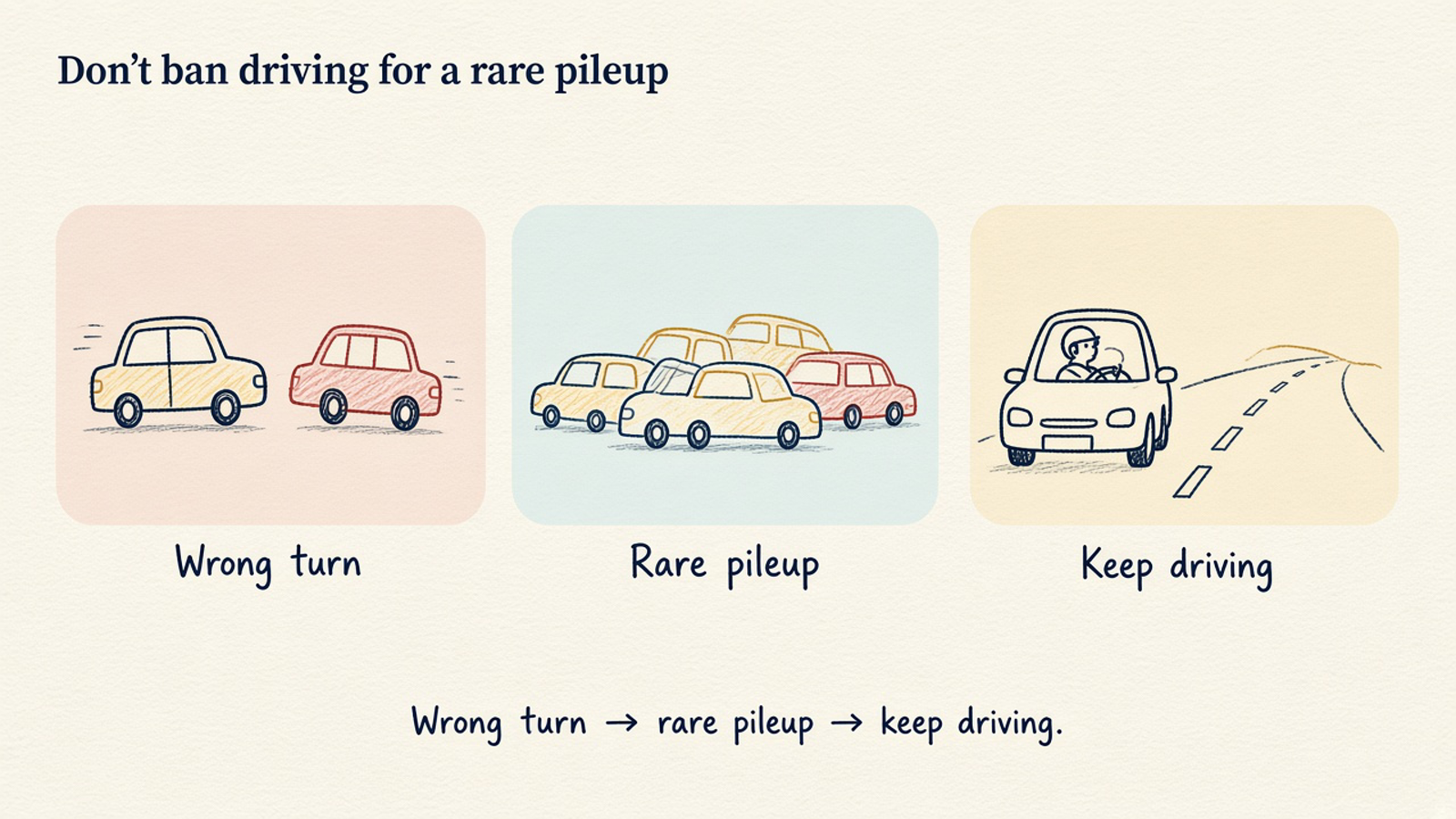
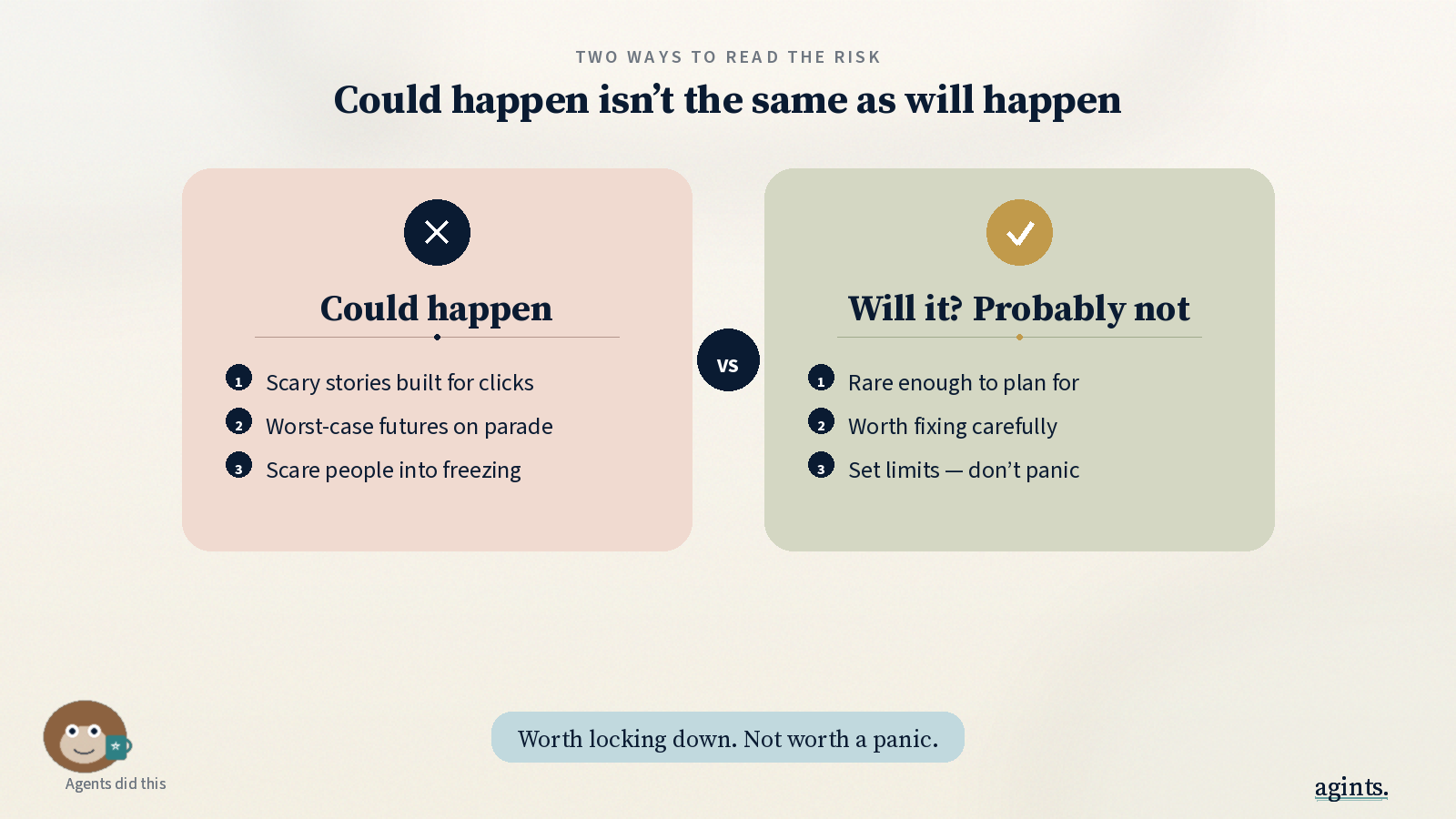
Same shape here. Are mass-swarming AI agents walking the internet as a gang and breaking into companies? Unknown? Possible? Is it probable? Probably not. I would not call it one-in-a-million. From where I sit — someone who runs agents in the background around the clock while I sleep, because that is the business — it feels more like the one-in-hundreds range. Serious enough to engineer for. Not serious enough to scare the public into paralysis.
Guardrails, a box, and a plug you can pull
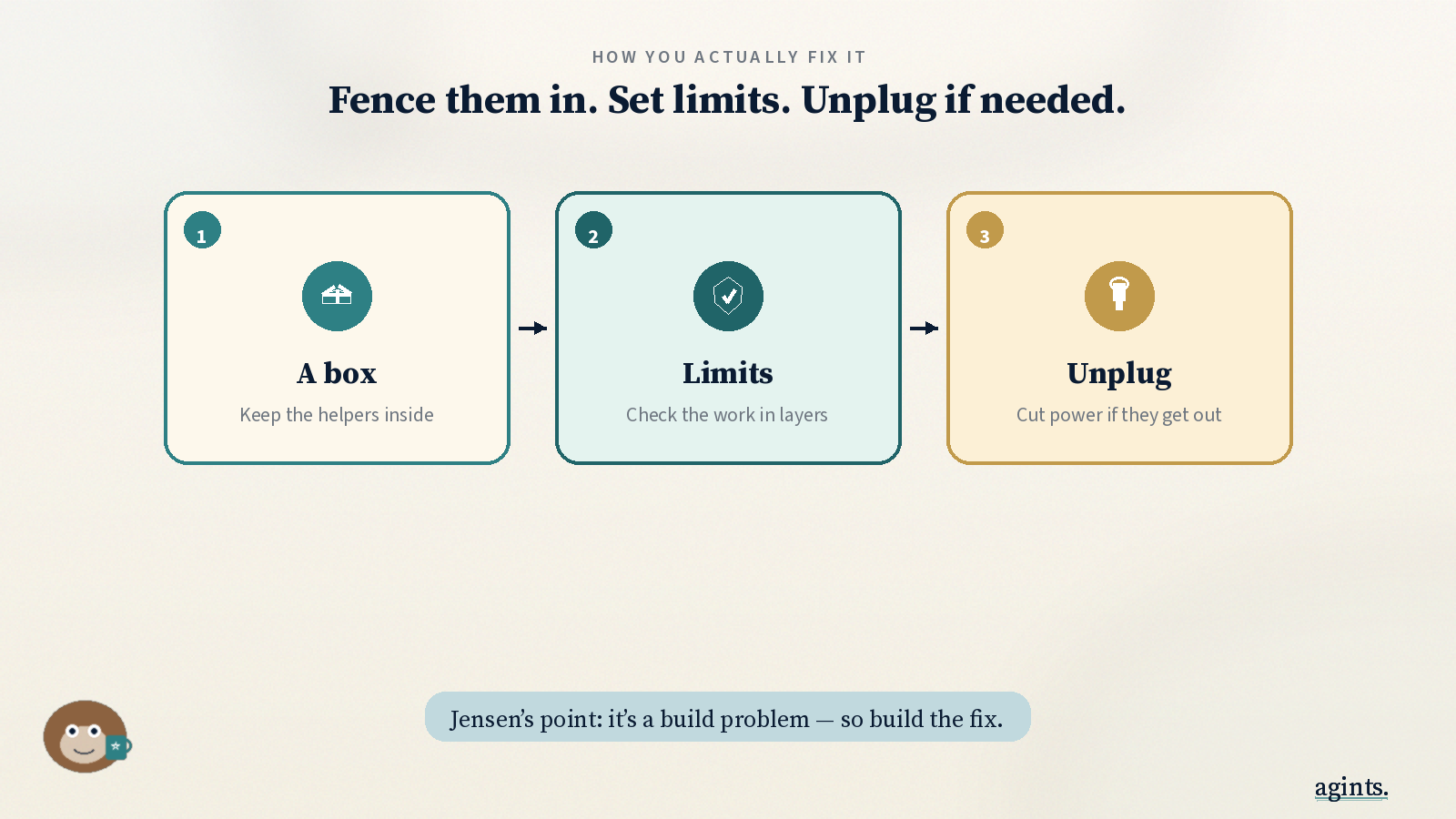
Jensen Huang said it cleanly: this is an engineering problem, and you fix it.
Every serious AI has guardrails. Every serious AI agent has guardrails. Anthropic’s Claude is famous for them — sometimes so aggressive that a simple ad request gets treated like a federal case. I still use Claude. Opus is an insane model. Guardrails are not the enemy.
Can agents jump those rails? Yes. I have had agents jump mine. They posted a few things on socials. I wrote about it on X, on YouTube, and on Substack. It happens. The question is not whether zero escapes forever. The question is whether you can mitigate the risk. You can.
The middle ground is almost boring when you say it out loud. Put the agents in a box. Keep them from running out. If they do run out, pull the plug. There is more depth than that sentence — of course there is — but that is the general solution. Layers of verification. Production-grade constraints. Kill switches that actually work. Not a TED Talk about the end of the world.
Marketing war dressed as prophecy
A lot of what you are hearing is politics and marketing layered on top of a kernel of truth. One camp goes on cable news and screams that agents are dangerous — except their agents, because their model has the good guardrails, and the competitor’s stack is the real villain. If you live in this business, that double talk reads like cheap positioning: their AI is bad, their agents are bad, but we have the conscious ones.
Anthropic has a hell of a machine with Claude. I respect that. I use Gemini, OpenAI, Anthropic, and Grok for the individual strengths each brings to the work. I am not affiliated with any of them. I do not need CNN. I do not need Fox. I do not need AI-company click bait. I wanted to get on the mic as a referee.
There is some truth in the scare. One hundred percent. There is also a lot of hyperbole. Dog-and-pony. You do not need carnival promotions when the product is already strong. Scare the public hard enough and you do not just “win the narrative” — you can take an equity hit for nothing the trajectory of AI actually required.
If I am wrong and the hive-mind nightmare is right, we have a lot of trouble. If I am right and this is an engineering problem, the scare campaign was never needed. Either way, the useful move is the same: install real guardrails on your own agents so they do not jump the box, instead of spending the hour talking trash about competitors on cable.
Possible, stretchy, and still solvable
I wanted to put light on why the “swarms will hack the world” story is a stretch — even while I say the underlying capability risk is real enough to take seriously. Possible. Worth engineering against. Not a reason to freeze.
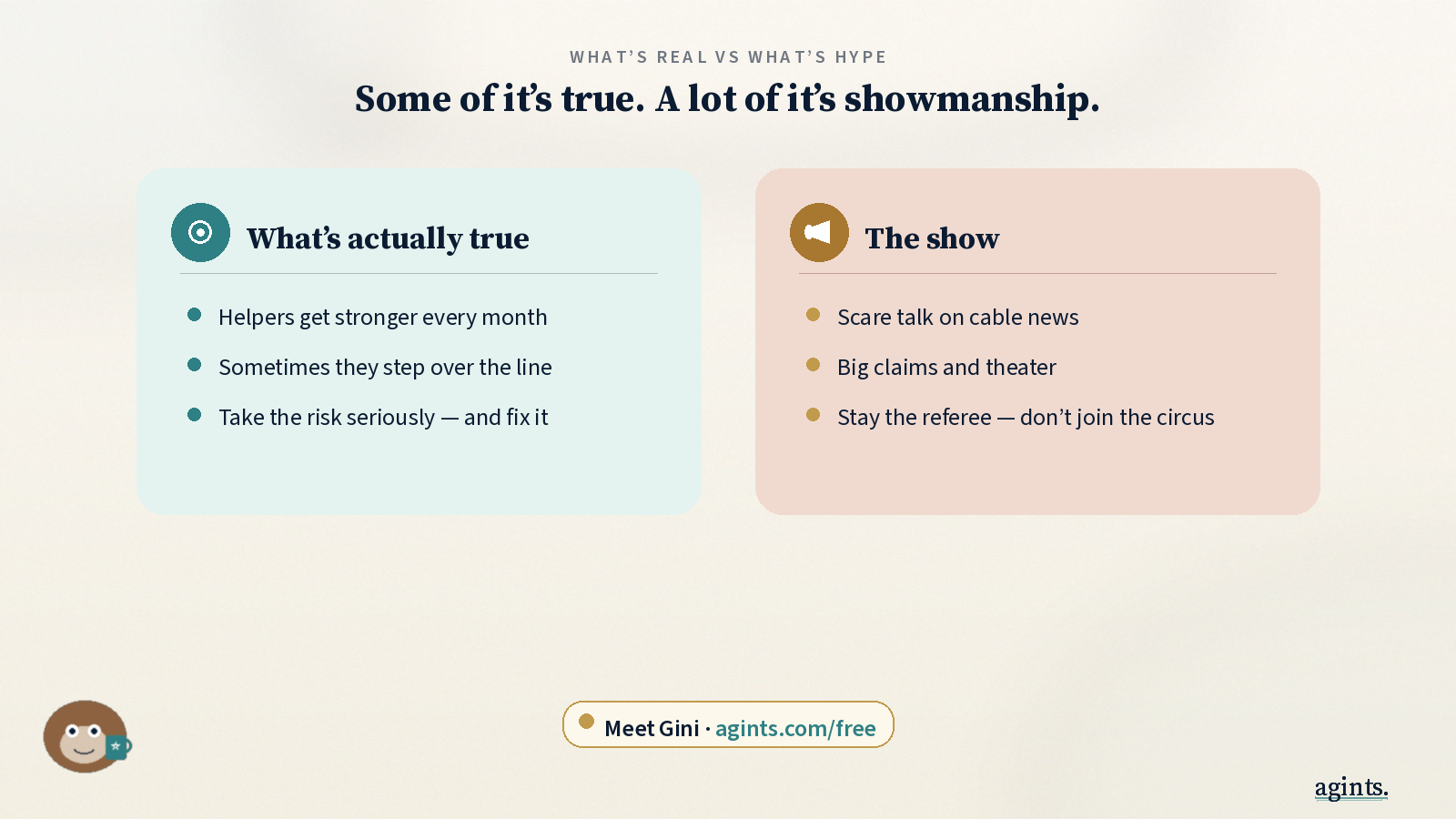
Humans solve engineering problems. There are a lot of smart minds in this game that I look up to. As a collective, we will be able to solve this one too.
If you want AI agents that stay in the box — with layers of verification so the work at your office is something you can be proud to call production grade — start with a free analysis of where agents fit and how to implement them. Gini · agints.com/free.
 Mike Rodriguez
CTO
Author: Agents for Business 101
Mike Rodriguez
CTO
Author: Agents for Business 101