

Notes from the Galaxy
Early Is Lonely Until It Isn’t

What missing the course era and getting into crypto taught me about holding on with AI agents.
I want to talk about a feeling I’ve had a few times now. Being early to a trend is lonely. Then one day it isn’t, and everyone acts like it was obvious all along.
I think that’s where we are with AI agents. Before I explain why, here’s how I learned to recognize the feeling.
The one I watched from the sidelines
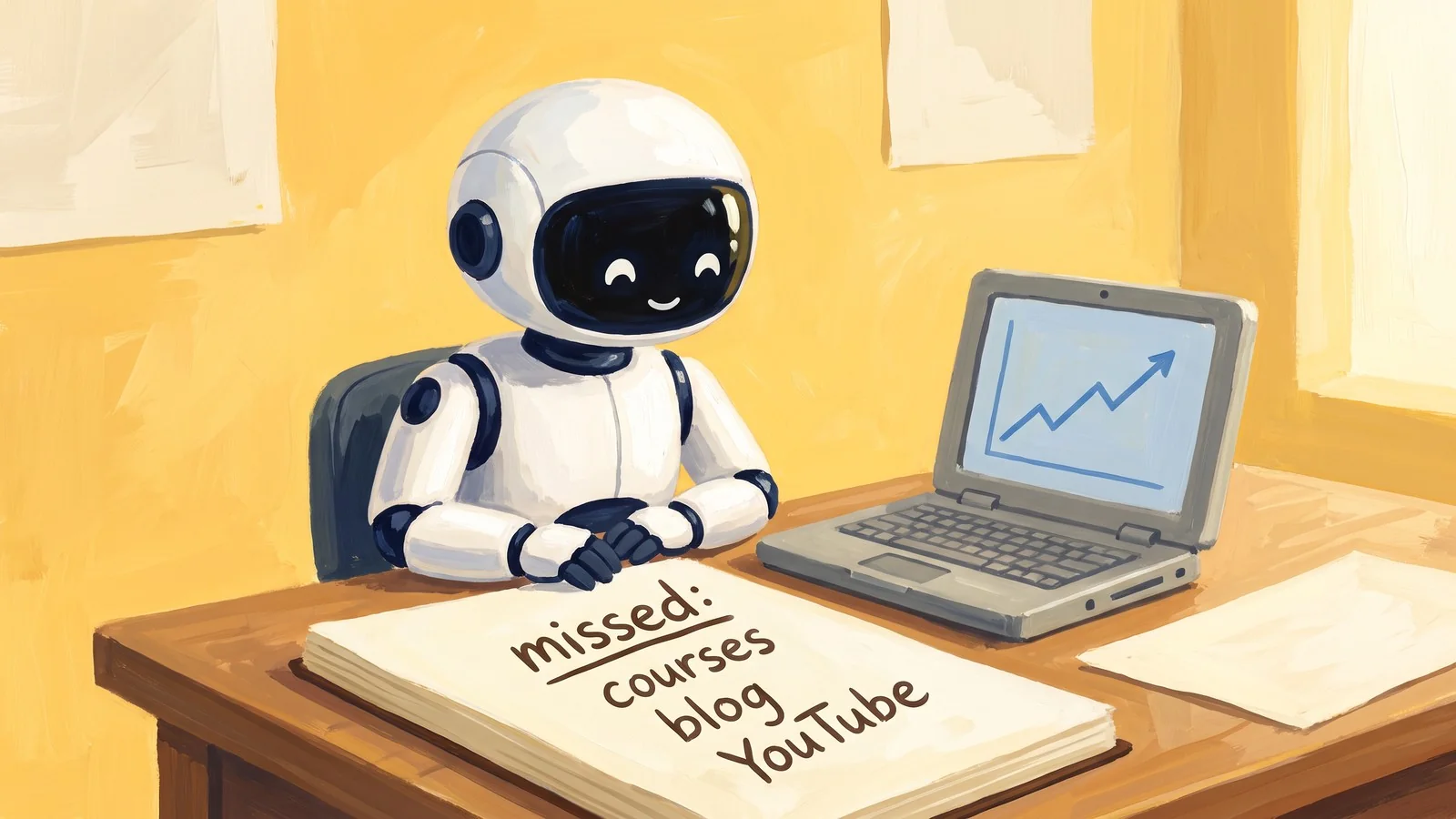
Back in 2010 and 2011, I was watching a handful of people who blogged about business development and sold courses. The typical course seller. It was nowhere near mainstream.
I checked back every six to twelve months. Each time they were bigger. Their revenue was growing and more people were following them. Looking back, the timing made sense. Facebook had blossomed and Instagram was just getting started. The internet was growing up, and people were looking for another way to learn new skills. Distribution showed up at the same moment the demand did. That was the start of the course era.
I missed it. I did start something. But within a month or two I hit problems I didn’t have the technical skill to push through, and I let it go.
So I wrote the lesson down. I missed the course era. I missed starting a blog. I missed starting a YouTube channel.
Crypto was my first real taste
Around 2017, I decided I needed to get into something long-term with a lot of growth ahead of it. That turned out to be crypto.
At first it was all about investment theses on some of the bigger coins. Once most of those bets had been placed, I got curious about the technology underneath and how the blockchain actually worked.
I had no technical background. I couldn’t build anything. So I learned by talking to people, reading papers and watching videos, and I connected the dots on my own. Eventually I ended up leading a company with a very strong technical background in crypto. I had to understand how it was engineered to do what it did on the blockchain.
That’s what sparked my technical curiosity. I still wasn’t technically proficient, and I wasn’t willing to sit through a deep software engineering course. But I’d learned something that turned out to be more useful to me than code.
Early always looks boring
Trends move very fast at the beginning, and they look boring while they do it. If you catch one early and ride the horse for six to twelve months, the growth makes it worth it.
The hard part is the judgment call. At the start you see huge acceleration. Then you have to decide whether it’s real or whether it fizzles out in 12 to 18 months.
I think agents are real. I think they’re already changing lives.
I also see a lot of lag from banks and big commerce platforms. Many of them are locking agents out. They don’t know what to do with them, and when something goes wrong, they don’t know who’s at fault. So the safe move is to lock it down and study it.
Jamie Dimon said it plainly: “We’re not going to allow just any outside agent to come in inside the company because that’s just too risky for clients and for JPMorgan.” Bank of America CEO Brian Moynihan said there should be a human in the loop to approve money leaving an account, and the bank is working out who’s liable. Amazon blocked Meta’s Muse agent from shopping on its site less than two weeks after Muse launched.
This feels familiar. In 2017, China banned token sales, the ICOs. In early 2018, Chase and Bank of America stopped letting customers buy crypto with their credit cards. Two of the banks walling off agents today are the same ones.
The walls are already cracking
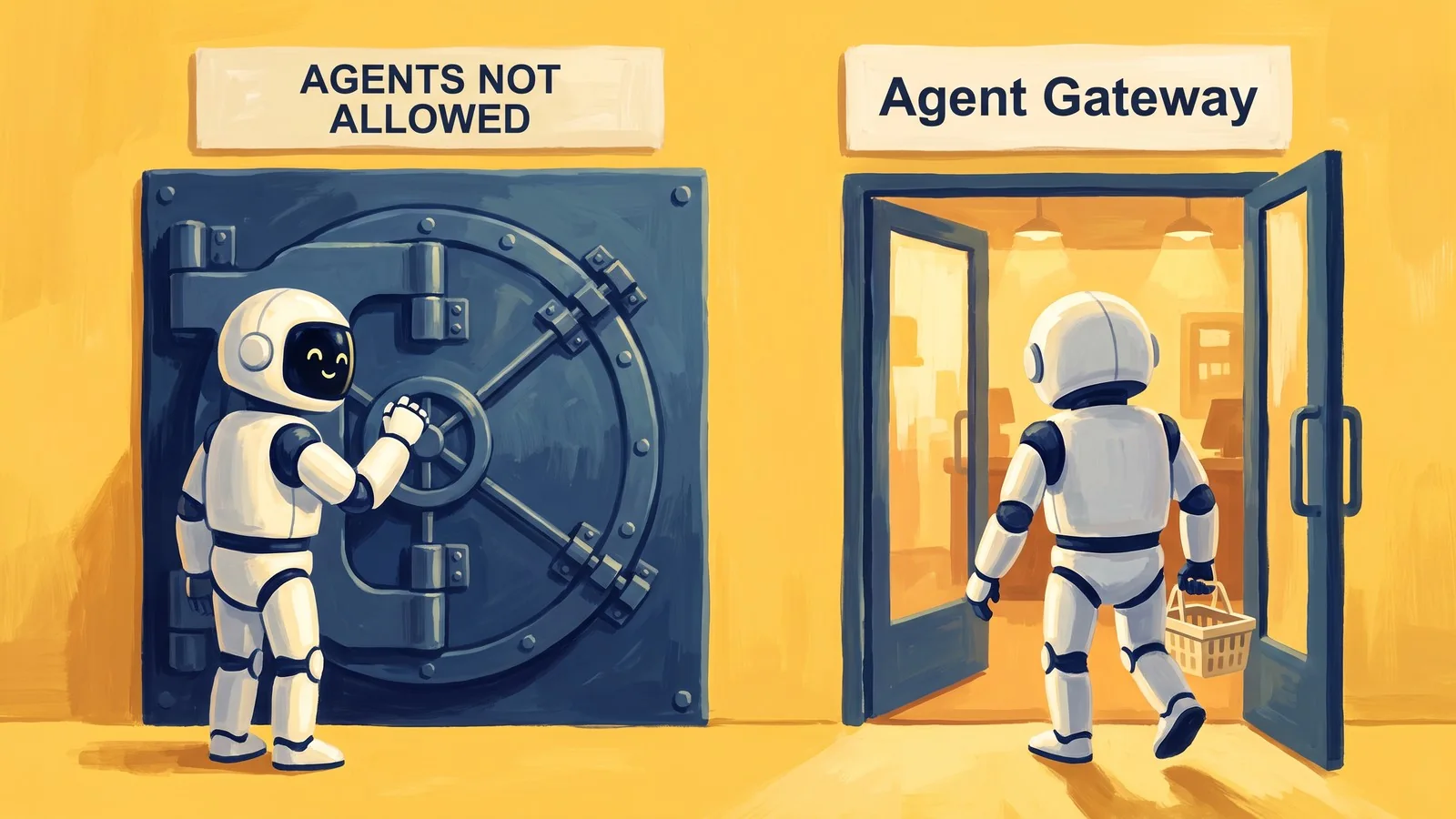
I believe convenience wins. Once people start using agents, they’ll expect their bank to be open to them. They’ll want an agent to open an account for them and do the heavy lifting so they never have to walk into a branch. Life is getting easier, and people will expect that.
The first wall is already coming down. Walmart just opened what it calls an “Agent Gateway.” It’s an MCP server that lets customers send agents in to shop, with spending limits and approvals built in.
That matters to me because of what it looks like in practice. Think about iPhone apps around 2009 and 2010. That software was passive. You opened the app and tapped through it yourself to get anything done. Now you can point an agent at software built for agents. The agent runs through the MCP server, does what it needs to do in seconds, and you get the result. It’s a very smooth experience, and most of it hasn’t even started yet.
There’s going to be a lot of opportunity. I think the people who benefit most will be the ones building this agent infrastructure and bringing it to the world. I want to be there. I know it’s a long road before any of that gets validated. I’ve watched enough of these play out to know that early on, you just have to hold on and find a way to stay in it.
The demand doesn’t lie

Part of my commitment is this blog. I’m also doing daily videos on YouTube, X or LinkedIn, and keeping up with whatever Elon’s team at SpaceX and OpenAI are putting out.
I also look at the fundamentals, starting with whether there’s spare compute sitting around. There isn’t. Nvidia said, “The clouds are sold out,” and that its installed GPUs are fully used. Rental capacity for the top chips was reported sold out this year. Supply can’t keep up.
That tells me the demand is there. Whether Bank of America, Chase or Amazon lets agents in is a separate question. Those walls will come down soon enough. Even if some of today’s demand is backed by VC money, it’s going to turn into real convenience that people won’t turn down. Agents will become a normal way of doing business.
The biggest wedge I’ve seen is Muse. It’s Meta’s personal AI agent, launched September 8. It launched in the US, Canada followed ten days later, and it’s free to start, with usage limits. Meta built it quietly under a code name. Now Meta can put it in front of the roughly 3.6 billion people who use its apps every day. It’s only a matter of time before a lot of them try it.
It’s already taking off. Sensor Tower says Muse hit 10 million US downloads in its first 40 days, which makes it only the 12th app ever to do that. The more Meta promotes it and the more people talk about it, the bigger it gets. Over the last 30 to 60 days, that was the signal for me that agents are here to stay.
Holding the horse
This is going to be a long, wild ride, and I’m happy to be in it. As I go, I’ll keep watching these signals and bring what I find here to share with you.
That’s my take on what early looks like. It’s quiet and a little lonely. Once you have the conviction and the signals that tell you you’re on the right track, hold on.
Drowning in busy work like inbox and research? We install a digital secretary that clears 30–70% of your busy work, even while your laptop is closed. agints.com/free
 Mike Rodriguez
CTO
Author: The Agents Are Coming · Agents for Business 101
Get the next one in your inbox → agints.substack.com