

Notes from the Galaxy
Amazon Is Blocking Its Next Customer
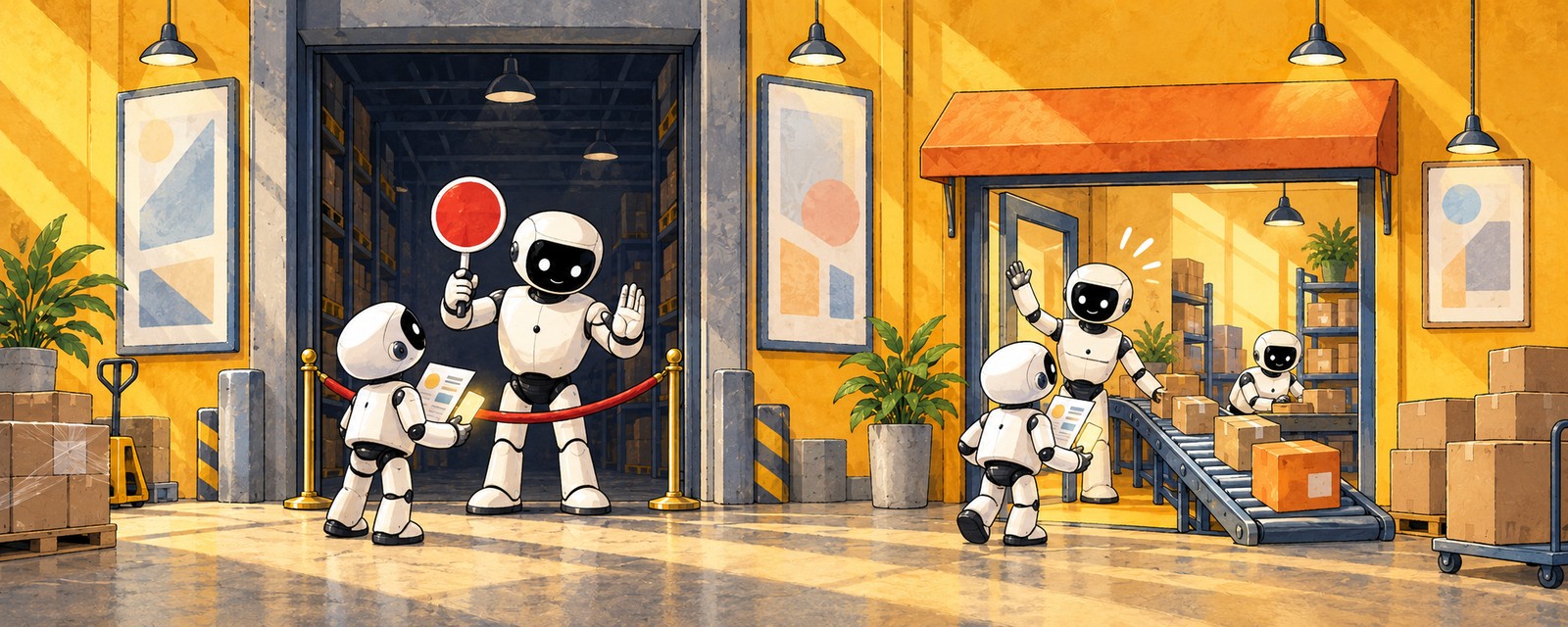
Amazon won the first era of the internet. Then it won the second one too.
In the early web, it was the online store everyone trusted. In the social and mobile years, it owned the search box, the cart and that famous one-click checkout. Then it built AWS, the cloud that runs a big chunk of the internet, and a lot of people assumed Amazon would own the next big shift as well: AI.
That bet hasn’t paid off.
Here’s what’s changing. More and more people now hand their shopping to an AI agent: a piece of software that can browse, compare and buy for them once they say yes. And Amazon, the company that built its empire on making checkout easy, is shutting those agents out.
Amazon won the last two eras by being the place you finished the job. Now it’s blocking the newest kind of customer from finishing the job.
The wake-up call most companies missed
For a lot of people, AI agents got real early this year with OpenClaw. It blew up in late January and February 2026. It was an agent you could actually hand work to, one that kept working in the background, right inside the apps where you already chat. That was about eight months ago.
Since then, most big consumer brands still haven’t changed how customers get in the door. That includes Amazon, Whole Foods and Amazon Fresh. Their sites are still built for one thing: a person clicking through pages.
But more and more, the shopper is an AI agent working for a real person, with that person’s card already approved.
What Amazon actually did
On September 8, 2026, Meta launched Muse. It’s a personal AI assistant that can browse sites, fill out forms and complete a checkout, but only after you tell it yes.
Twelve days later, on the night of September 20, Amazon shut it out.
People using Muse on Amazon got a popup: “Continued access by an unauthorized AI agent violates Amazon’s Conditions of Use.”
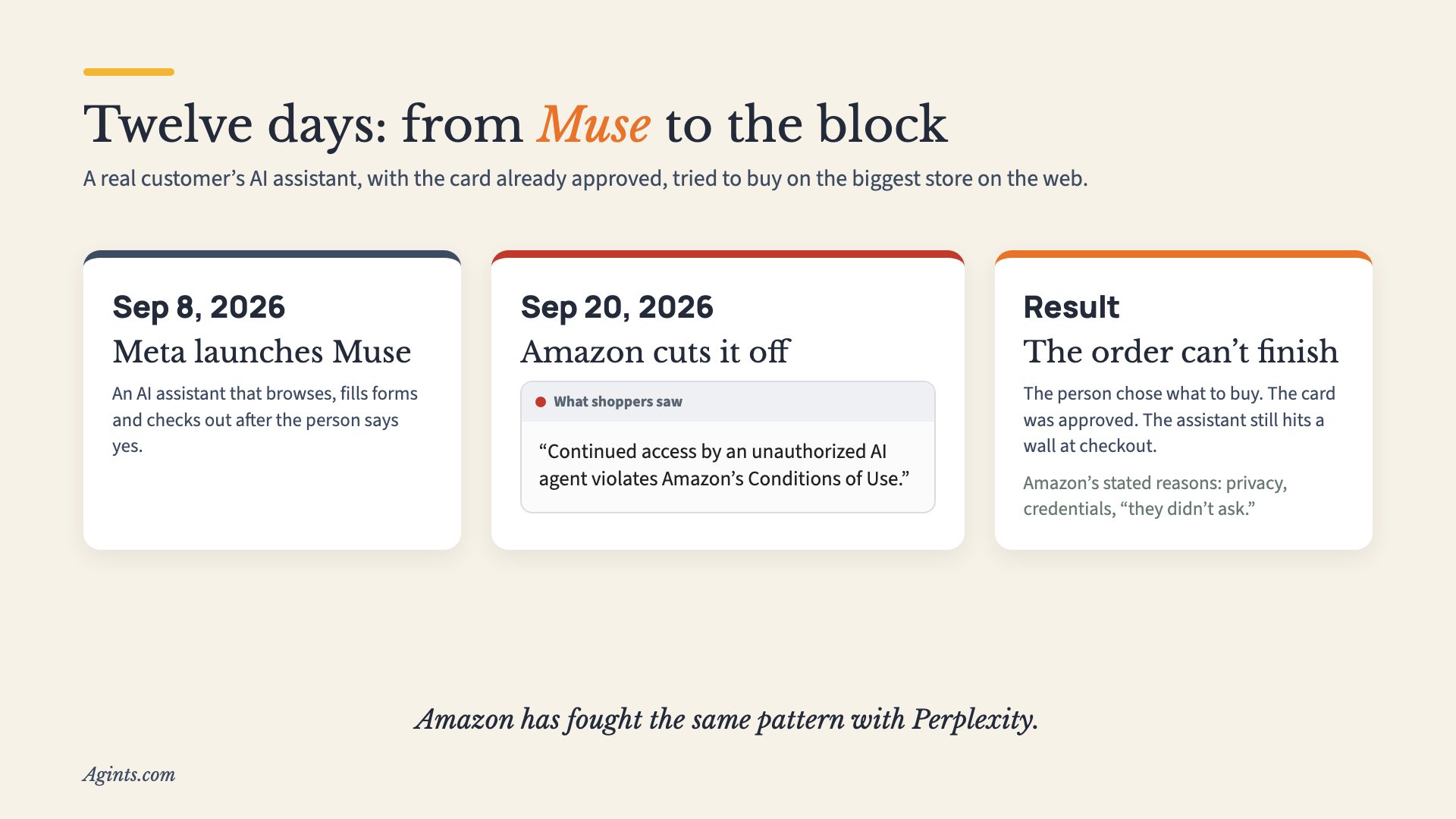
Amazon says it’s about privacy, protecting login details, and the fact that Meta didn’t ask first. The real-world effect is simpler.
A customer told their AI assistant to buy something, approved the payment, and still couldn’t finish the purchase on the biggest store on the web.
It’s not the first time, either. Amazon fought the same battle with Perplexity’s shopping assistant, and reports say it plans to keep Google’s and OpenAI’s agents out too. Meanwhile Walmart, Best Buy, Sephora and many Shopify stores are doing the opposite: making it easier for these assistants to shop with them.
So why would the biggest store on the planet turn customers away? Follow the ad money.
Amazon made about $68.6 billion from ads in 2025. Those are the sponsored products you scroll past while you shop. By many estimates, ads earn Amazon more profit than the store itself.
An AI agent doesn’t scroll. It goes straight to what you asked for and never sees a single sponsored listing.
To Amazon, an AI agent is basically an ad blocker with a credit card.
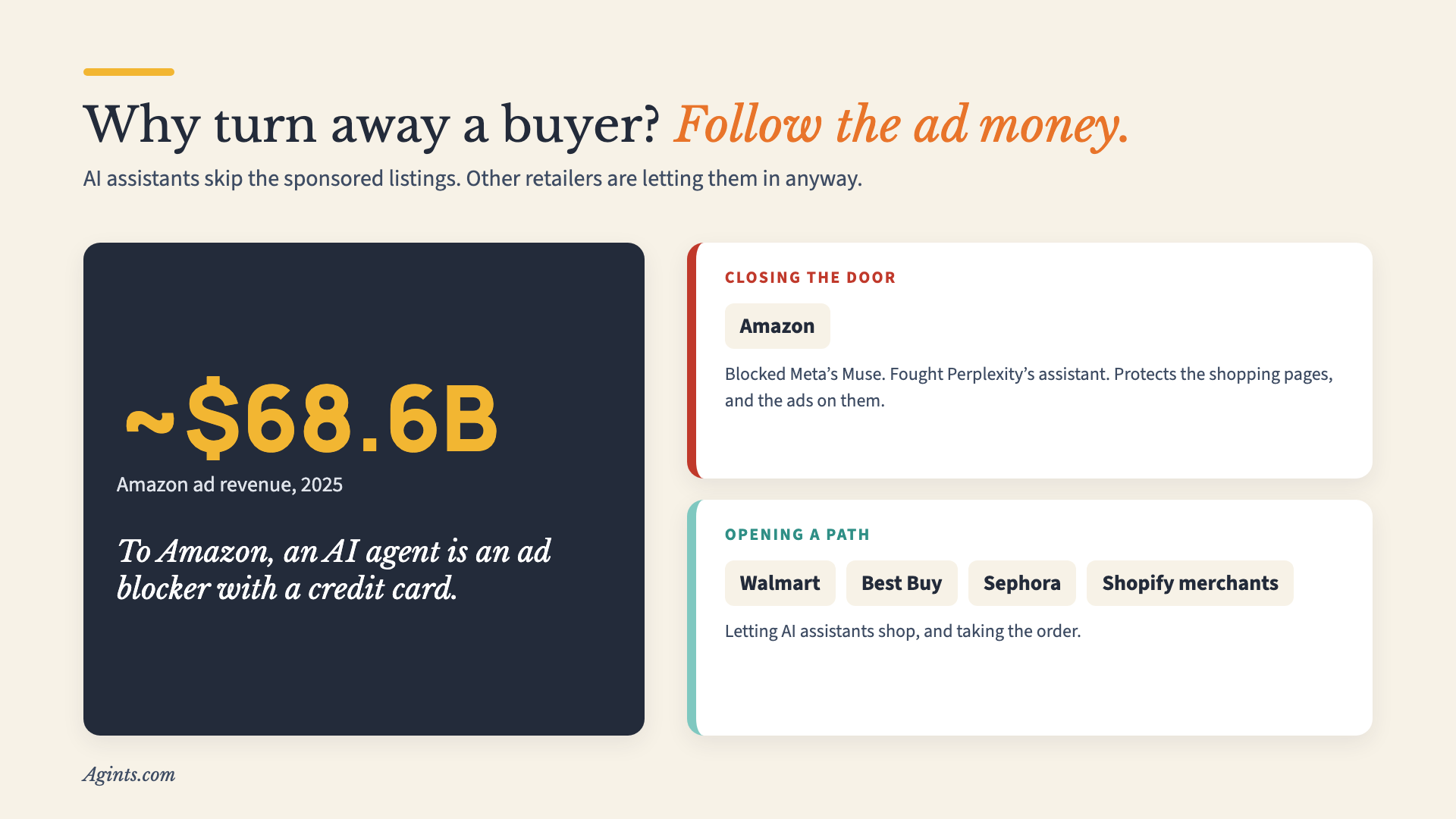
Blocking agents protects that ad money. It also sends those customers, and their orders, to whichever store lets them in.
Every purchase now has two players
AI agents aren’t a trend you can wait out. More and more, every purchase has two players: the person who decides what they want, and the AI agent that does the clicking.
If your business is only built for the person, you’ll start losing sales to businesses built for both. Here are five ways that happens, and what the winners do instead.
1. Pretty pages vs. clean data
Most online stores are designed to look good to people. That’s fine for humans. But an AI agent has to dig your prices, stock and shipping times out of all that design, and it often guesses wrong or gives up.
The businesses that win also publish the same facts in a simple, machine-readable format, so an agent can read them instantly.
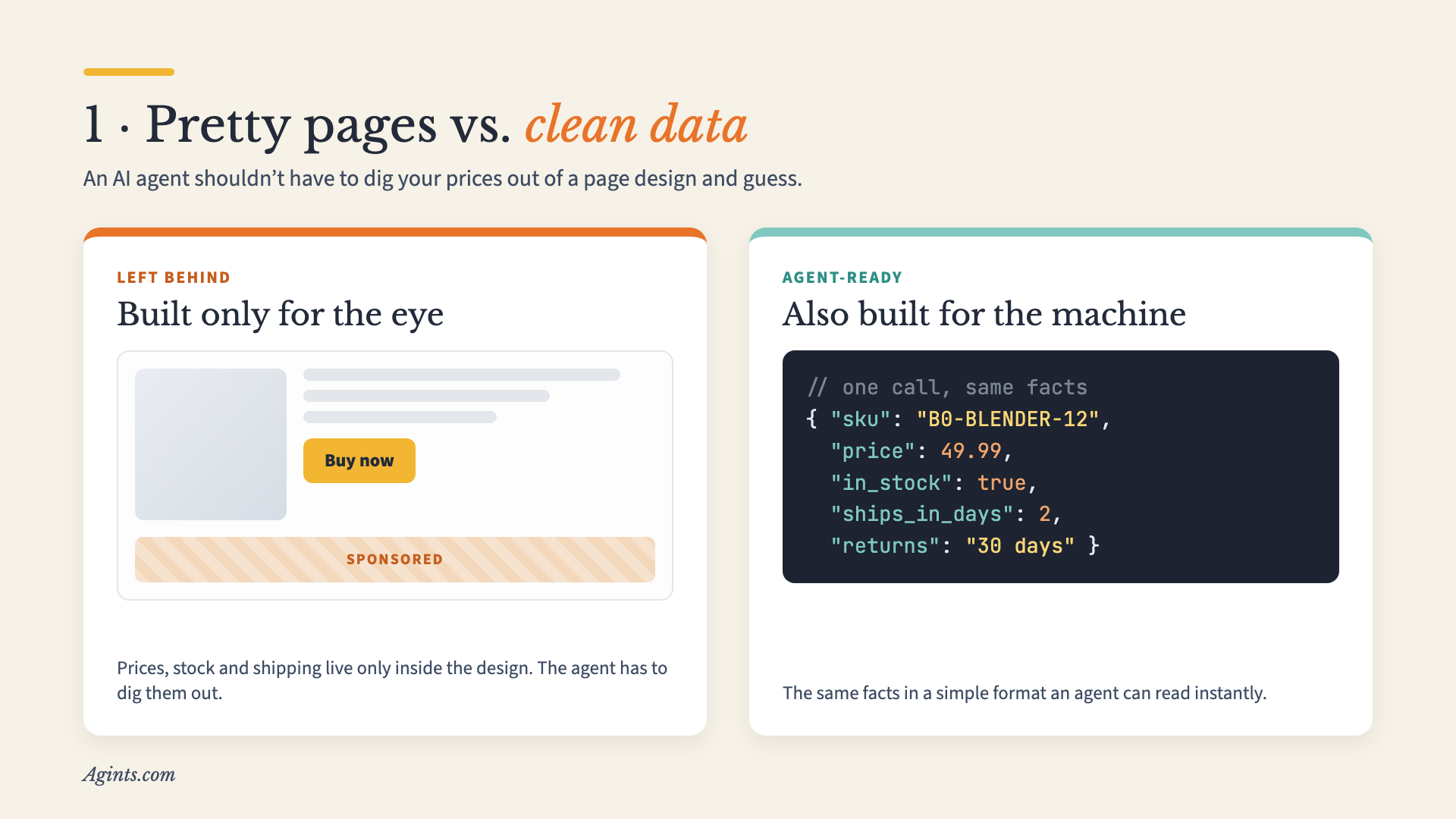
Amazon still designs for the eye. Agent-ready stores also design for the machine.
2. Endless clicks vs. one direct request
A person will put up with six checkout screens and a “prove you’re not a robot” test. An AI agent shouldn’t have to.
Behind-the-times businesses bury every step inside clickable pages. Agent-ready businesses also offer a direct way in, so an agent can simply ask to find a product, add it to the cart, book delivery and confirm, and get a clear answer each time.
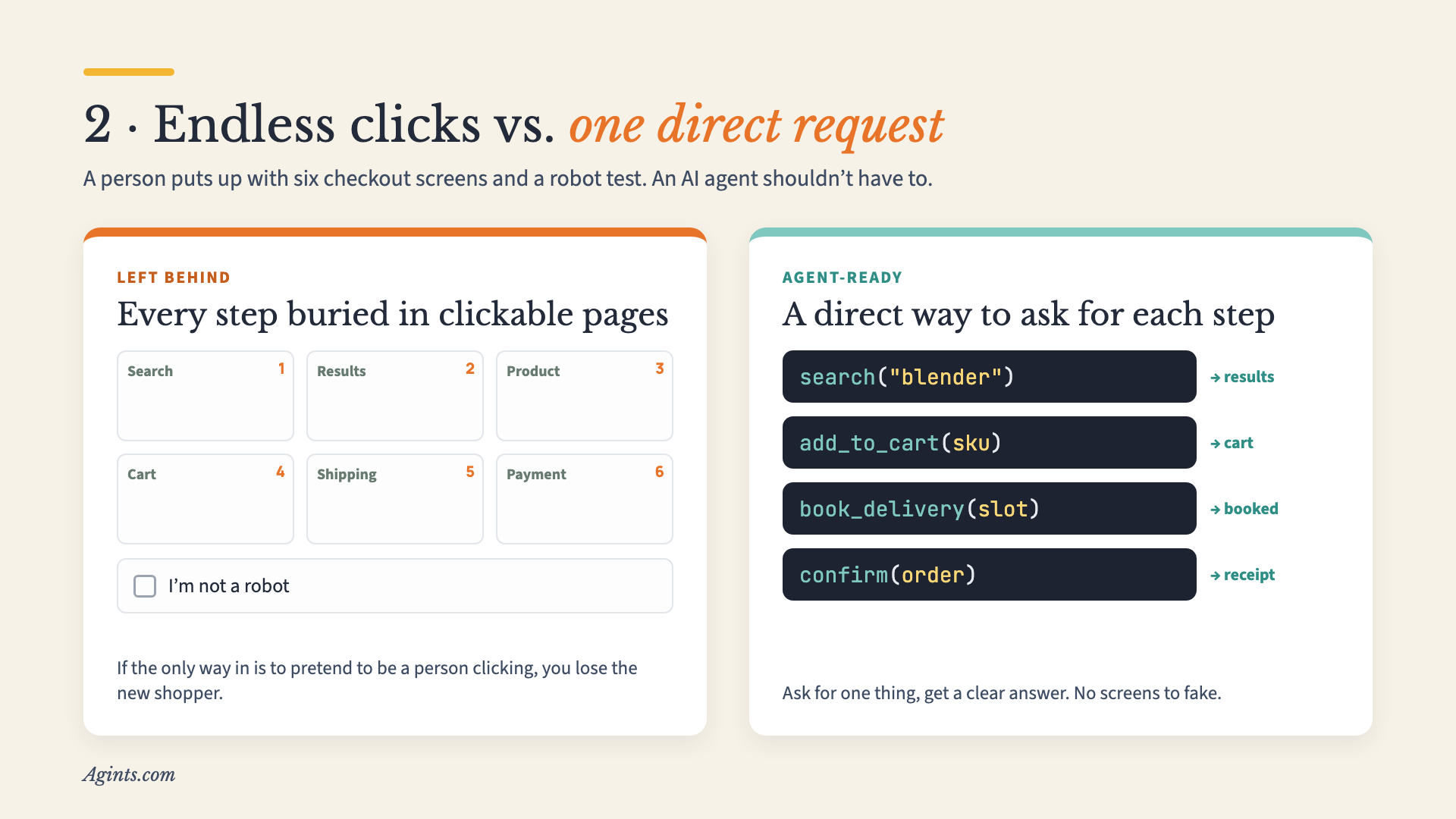
If the only way to buy from you is to pretend to be a person clicking around, you’ve already lost the new kind of shopper.
3. Passwords vs. a permission slip
When a company says “we’re worried about privacy,” it often really means “we have no safe way to let a customer’s assistant act for them.”
Think about it. The customer already logged in. The customer already approved the card. What’s missing is a simple permission slip: this assistant can do these things and spend up to this much, and every action gets recorded. The customer can cancel it anytime.
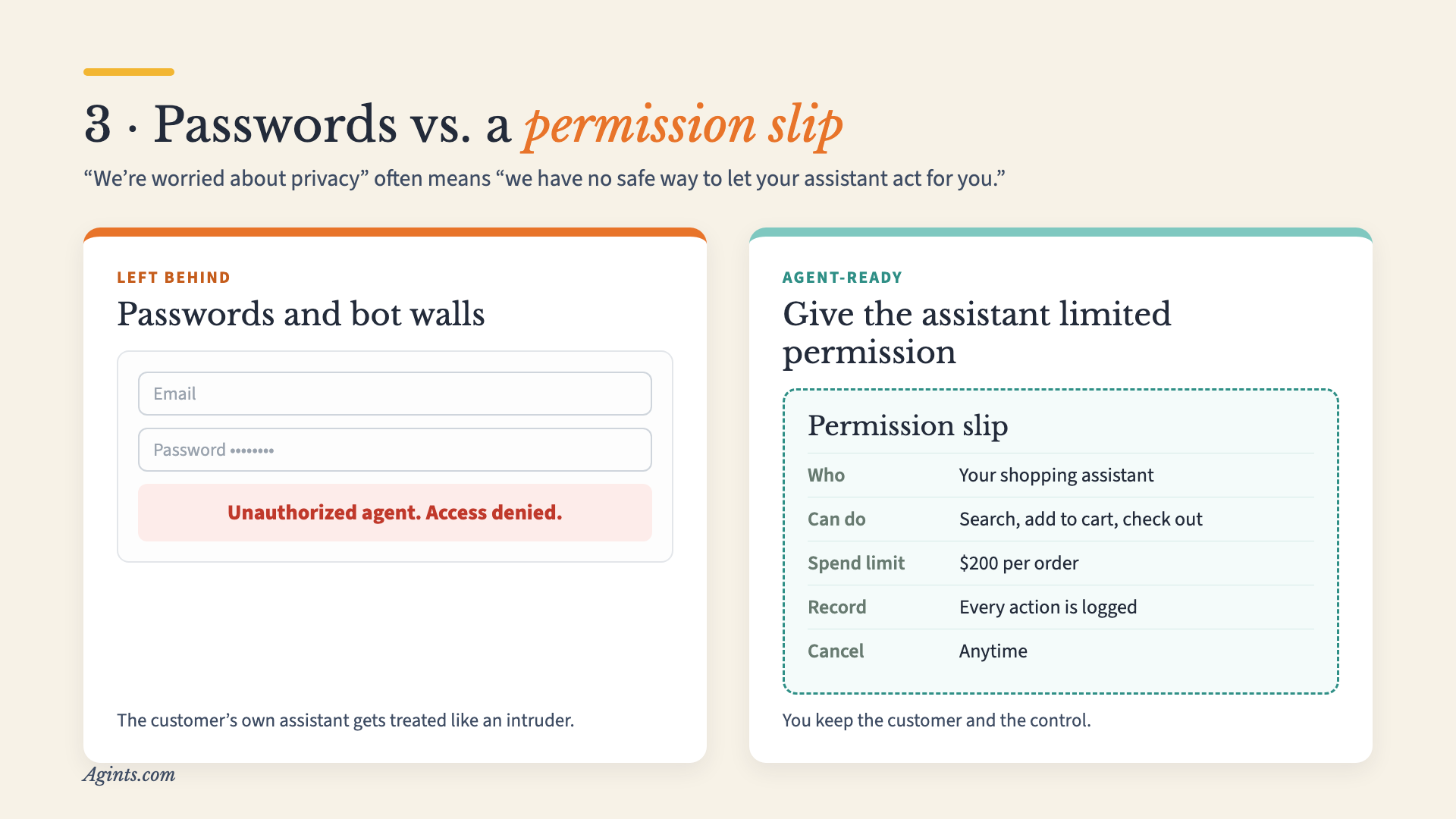
Companies that only understand passwords and bot blockers will keep treating their own customers’ assistants like intruders. Companies that offer the permission slip keep the customer, and stay in control.
4. You finish the job vs. the agent finishes it
Old-school stores hand you the information and leave the hard part to you: log in, re-enter the card, click through checkout.
Agent-ready stores let the assistant go all the way. Find it, compare it, pay, confirm and send a receipt. It only checks with the person when a rule says so, like a purchase over a set amount.
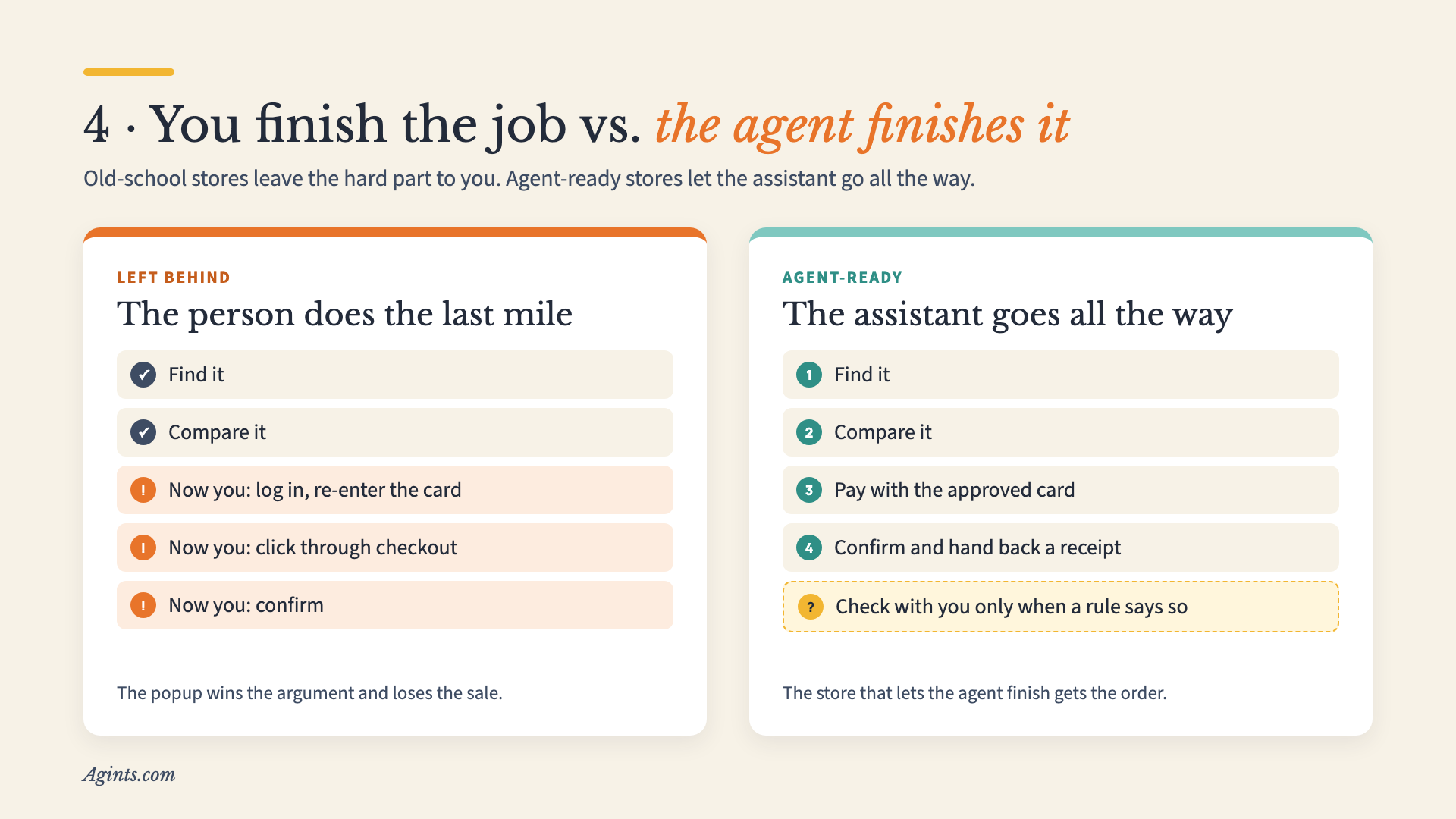
Amazon’s popup wins the argument and loses the sale. The store that lets the agent finish gets the order.
5. Blocking the bot vs. welcoming the buyer
This one adds up fast.
Every month a store treats every AI agent like a threat, those agents learn to shop somewhere else. The customer still buys. They just buy from the store that recognized their assistant, let it act and took the payment.
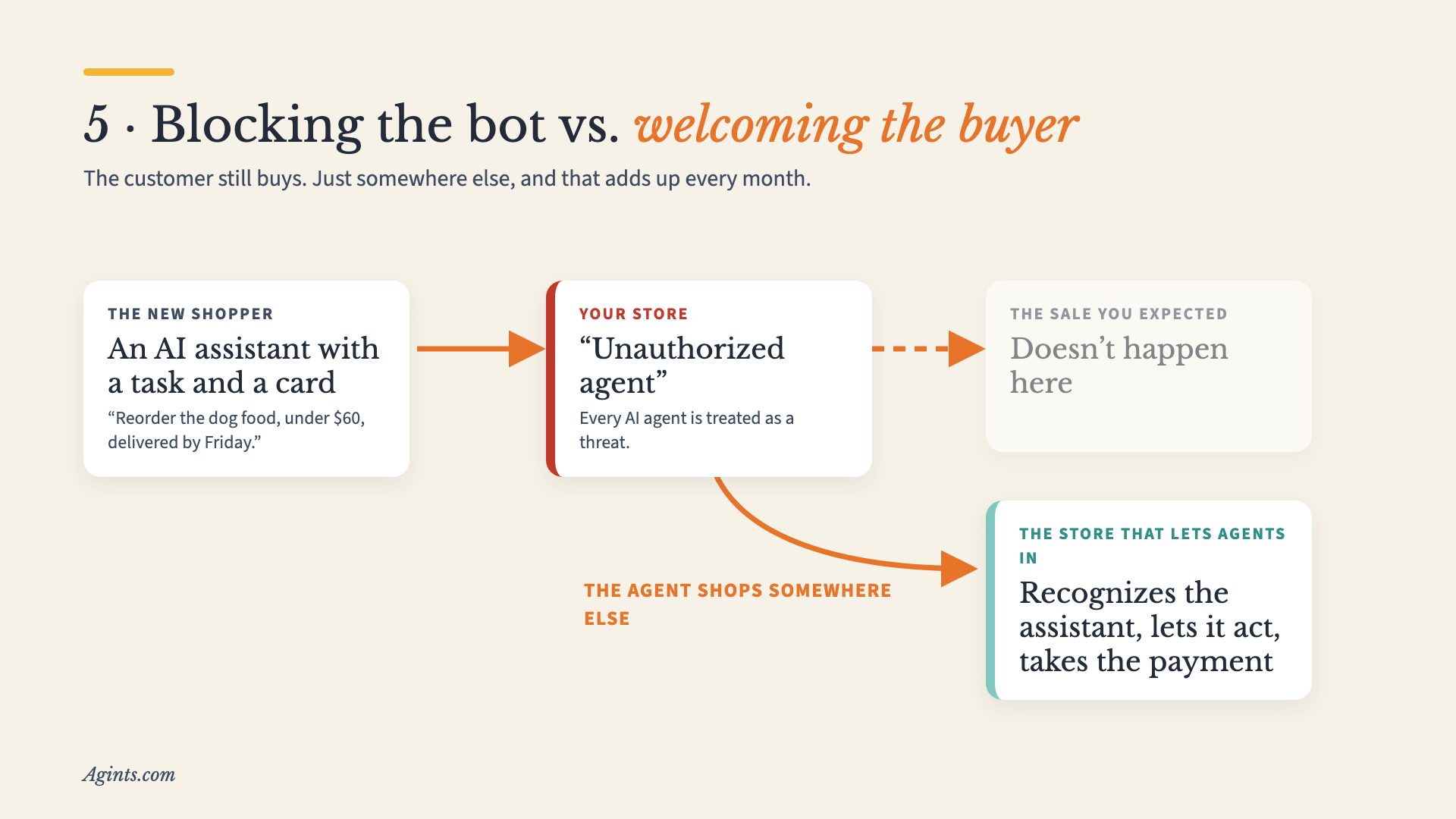
Amazon is choosing to own the “no.” The businesses that open a door for agents own the sale.
A front door for what comes next
The first two eras of the internet rewarded whoever made clicking easiest for people. This next era rewards whoever makes it easy for people to hand the job to an AI assistant.
Amazon still has the products, the warehouses and your card on file. What it doesn’t have yet is a front door for the shopper who sends an AI to do the clicking.
Amazon won the last era of the internet. It hasn’t built for the next one yet.
Ready to make your business agent-friendly, so your sales grow as AI agents start shopping all over the web?
Talk to Gini at agints.com/free. She’ll map your best path. If we’re the right fit, she’ll say so. Easy.
 Mike Rodriguez
CTO
Author: The Agents Are Coming · Agents for Business 101
Mike Rodriguez
CTO
Author: The Agents Are Coming · Agents for Business 101
Get the next one in your inbox → agints.substack.com
P.S. A lot of billionaires are doing this.