

Notes from the Galaxy
Three Things AI Agents Change for Your Company
More productivity, happier staff and better labor economics. Your competition has been looking at it since Grok Bot launched in August.
If you’re a high-level executive at a major company, this one’s for you.
If you haven’t been following it, Elon’s SpaceXAI released Grok Bot in August. It’s an AI agent positioned at basically solving busywork for most people in the professional world. This is an incredible technology, and I want to catch you up on the three main things that will improve in your business once you implement AI agents.
1. Productivity goes up
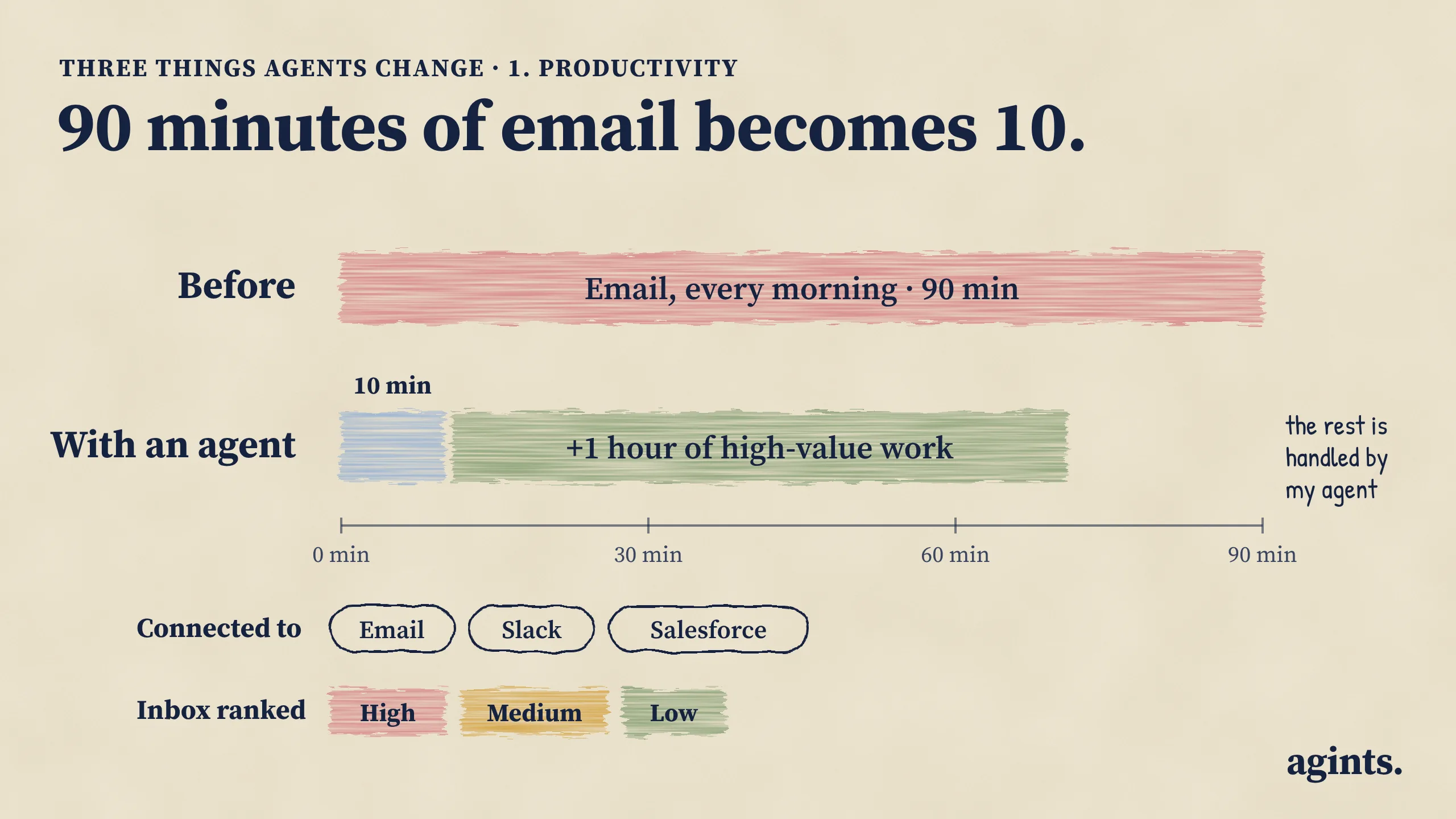
A lot of your staff’s busywork lives in email, Slack and every other tool they touch. That work can move to an AI agent. These agents connect to email, and to pretty much anything else, like Salesforce. Once those tools are connected, the agent clears out most of the busywork your staff does today.
Imagine unlocking bandwidth they’ve never had, so they can spend it on higher-value activity.
Rather than fighting through two or three hours of email every morning, why not have a digital assistant grade everything and rank it into high, medium and low priority? Now the person who used to start the day with an hour and a half of email looks at it and says, “I can do 10 minutes, and then do an extra hour of high-value work, because I know the rest of my email is being handled by my agent.”
That’s an extra hour, hour and a half, of high-value work going straight into the company.
That’s one hour. Now do the annual math. One hour a day over 300 workdays is 300 hours a year, about seven and a half extra work weeks, and that’s just email. Take out all the busywork and you’re giving each of your leaders back two to four hours a day: 600 to 1,200 hours a year. If that person’s time is worth $400 to $1,000 an hour to you, that’s $240,000 to $1.2 million of value per person, every year.
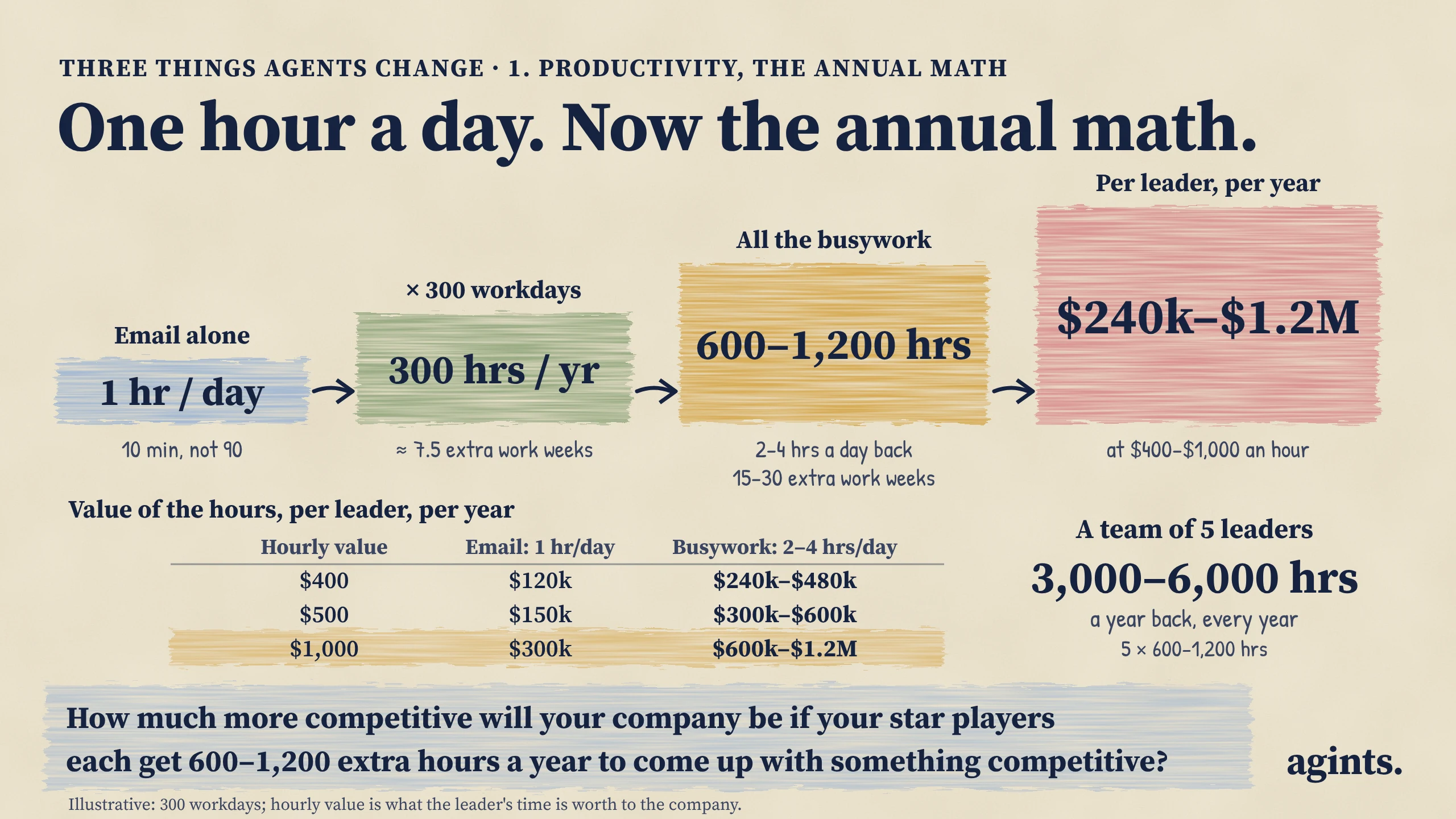
So here’s the question I’d leave you with: how much more competitive will your company be if your star players each get 600 to 1,200 extra hours a year to come up with something competitive?
2. Your people show up happier
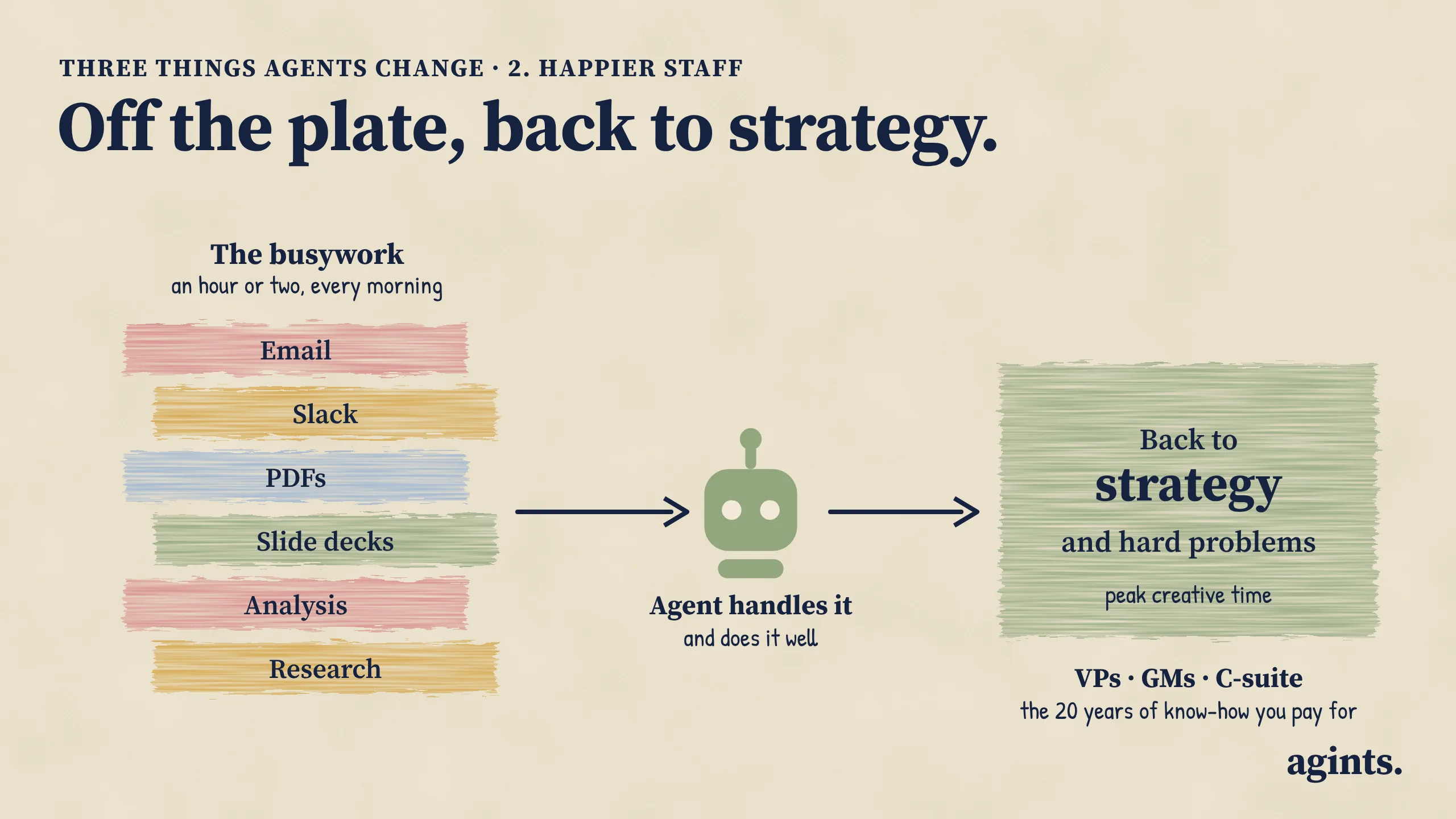
When humans don’t have to do as much busywork, because agents are offloading it and doing it well, you get happier staff.
Picture your VPs, your general managers and your C-suite showing up excited, because they don’t have to slog through an hour or two of email, Slack, PDFs, slide decks, analysis and research first. Even people with an administrative assistant have so much busywork in their day that it eats into their high-level thinking.
That strategic thinking is what you’re paying these people for. They’ve built up 20 years of knowledge so they can think through hard problems, not so they can do email for an hour and a half in the morning, during their peak creative time.
When your key people show up happy, productivity doesn’t just go up. The mood, the energy and the whole culture of the business move forward.
3. The labor economics change
This one is huge.
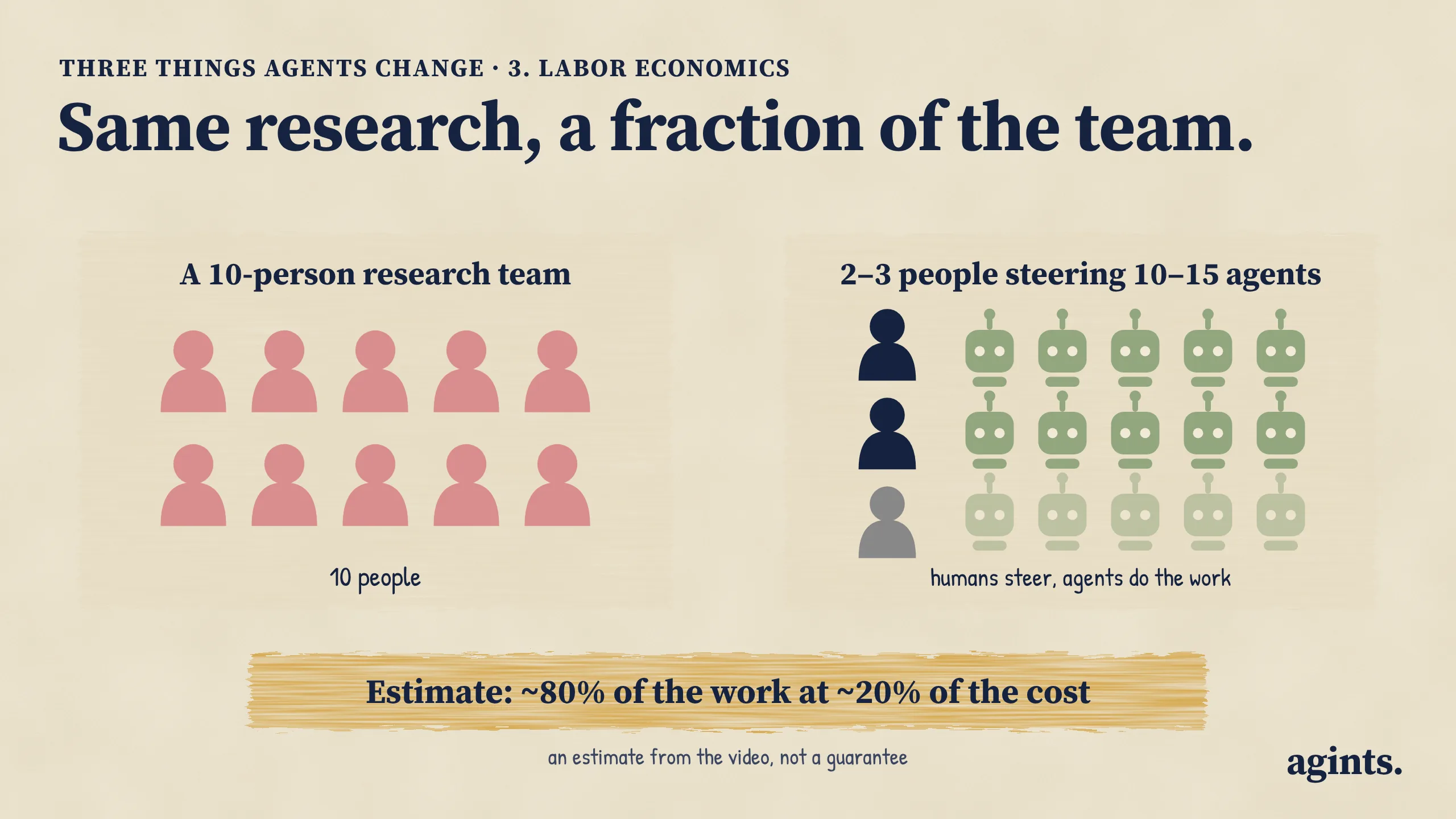
Take what used to be a 10-person research team. Now picture two or three humans steering 10 to 15 agents and making sure the work gets done. You’re probably going to get 80% of the work done at 20% of the cost.
And the work is consistent, because agents work 24/7, even when your laptop’s closed. Give it research over the weekend, and it gets done.
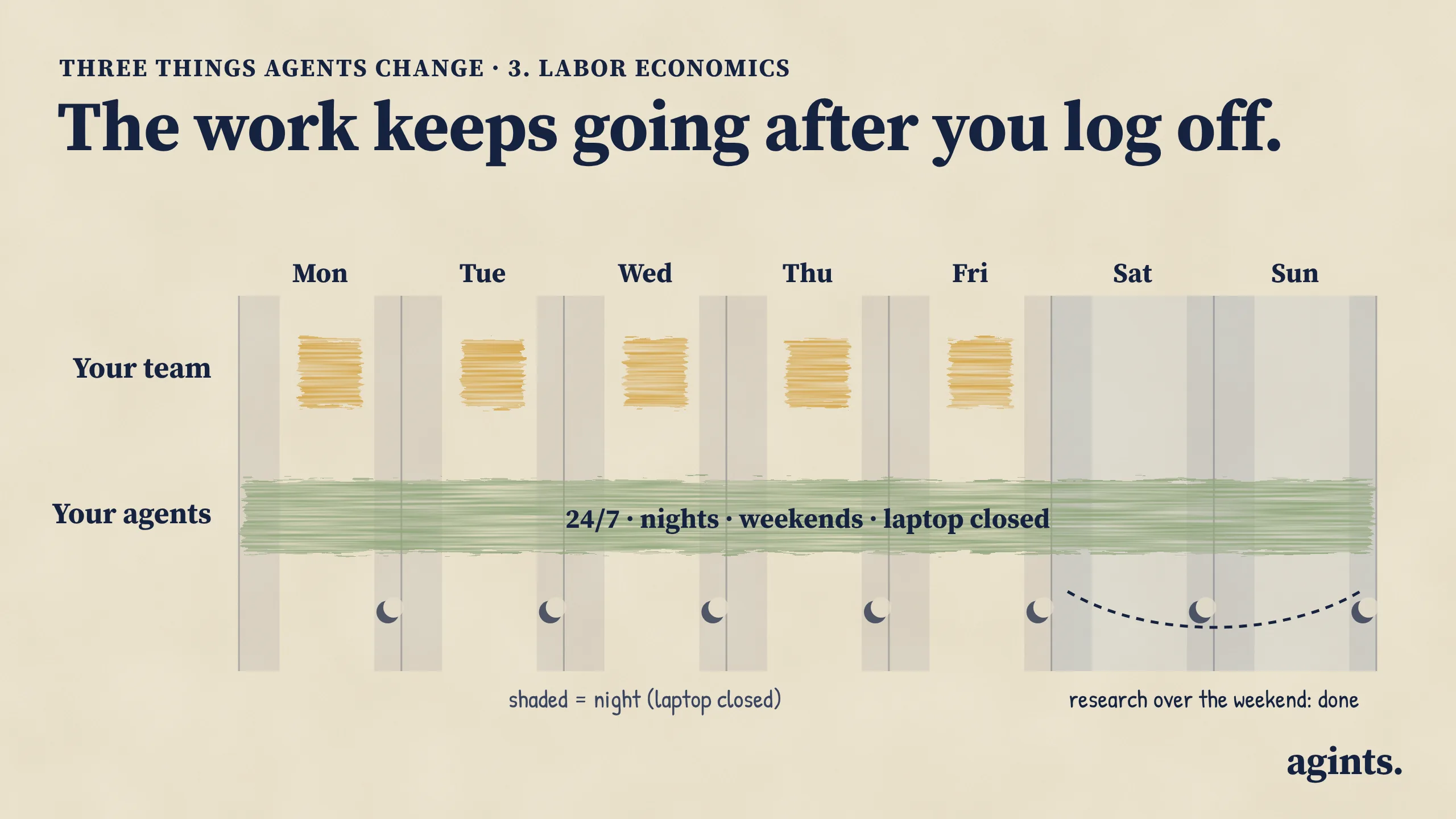
“You’re probably going to get 80% of the work done at 20% of the cost.”
Your competition is already looking
That’s why Elon released this technology, and why OpenAI and a few others, like Meta with Muse, have done the same. Agents are taking off.
If you’re already aware of it, fantastic. It’s time to implement it. If you’re not, it’s time to do a little research and get on the implementation bus, because this is what your competition is doing. They’ve been looking at it since Grok Bot launched.
I recorded this at a conference in the Middle East about exactly this. If you’re in the C-suite and you’ve heard about “these agent things,” don’t sit on it.
Where to start
You could ask ChatGPT where to start. It might get you somewhere, but it isn’t great with current events.
A better place is agints.com/free. That’s where you can talk to Gini, the super-intelligent agent we’ve been programming for a very long time here at Agints. You’ll get a glimpse of what an agent can do on the customer-service side, the sales side, and with general intelligence for your company.
This isn’t a chatbot from 2018, or even 2024. Ask her the real questions: Where can I implement this in my business? Where will I get the best efficiencies? What’s this going to cost? What’s the actual value of AI agents? She’ll explain all of it, in a real human voice.
I guarantee it’ll be the best two minutes of your day. When you’re ready, talk to Gini and see how to get started.
A digital secretary that cuts 30–70% of your busywork — even when your laptop’s closed. See if it’s a fit: agints.com/free
 Mike Rodriguez
CTO
Author: The Agents Are Coming · Agents for Business 101
Mike Rodriguez
CTO
Author: The Agents Are Coming · Agents for Business 101
Get the next one in your inbox → agints.substack.com