

Notes from the Galaxy
Small Legal — Why $20/mo AI Is a Base Case
I’ll make a base case for AI at a minimum of $20 per user — once people find out the basics of what it can do. I’m going off personal experience.
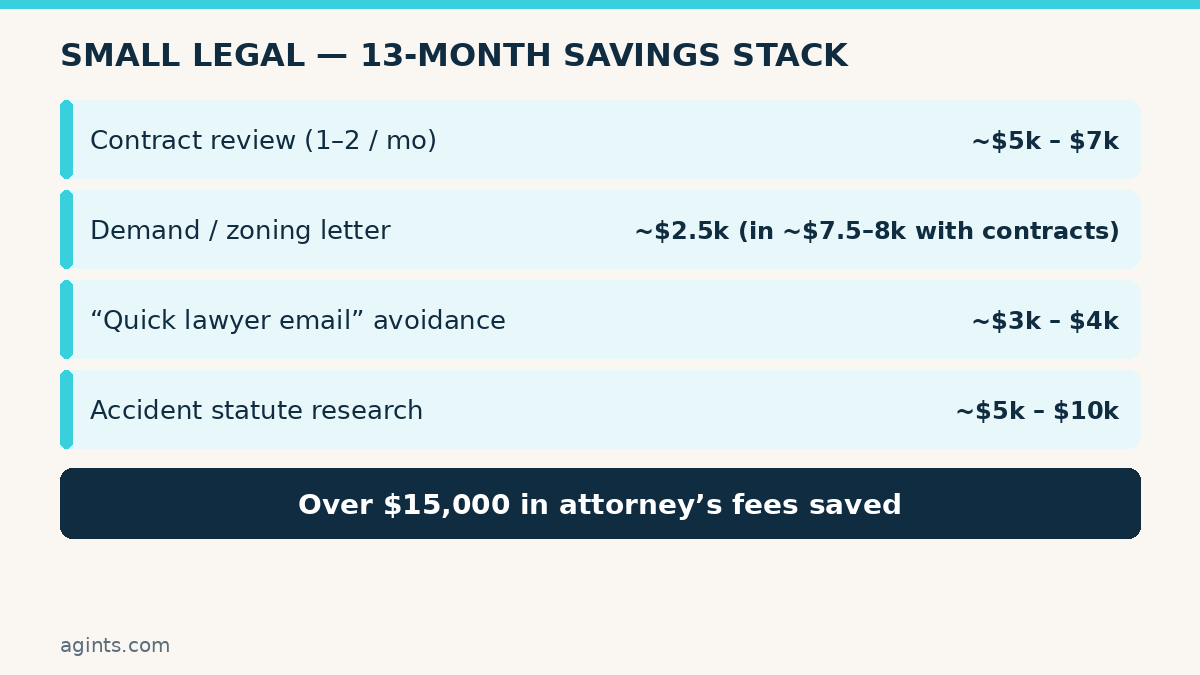
In the last 13 months, a little over a year, I’ve saved myself over $15,000 in attorney’s fees by looking up what was pertinent. Not only things I was dealing with in business — things the family was looking up, and friends of mine were looking up. Here’s how that breaks down.
Contract review: calling out the risk in the legalese
I’ve had to look over probably one or two contracts a month. From any type of contract lawyer, that easily runs $500 to $1,000 a pop — and it adds up when the cadence is monthly.
I’m probably not finding the best contract review with AI. What I am doing is calling out a lot of the important things baked into legalese: the clauses that may or may not be liability points or risk points for me, both personal and business. You don’t need a perfect review to stop yourself from signing something that puts you in a disadvantaged position. Depending on how you score an attorney’s hourly rate, just in that lane I’ve probably saved five to seven thousand dollars over those 13 months.
Demand letters: zoning changed after the sale
I’ve gotten two demand letters from previous business. One of them was a real-estate transaction that had already closed. Zoning law for that property changed six months after I sold it.
The alleged issue was that they figured I already understood this was a possibility — and that I did not disclose it. I wasn’t part of any government. I had no preview into what zoning might do. Still, I had to draft a letter to defend my position and avoid having them take me for a ride in the judicial system — court, and then ponying up for an attorney to explain the same facts before a judge.
So the fork was clear. Draft a few legal letters that strengthen the position, showcase confidence, show the law on my side, and make plain I had no knowledge — or previous knowledge — that zoning would change and negatively impact them. Or get an attorney to draft that letter: $1,500 to $2,000 at a minimum, realistically $3,000 to $4,000. Just that one letter, I probably saved about $2,500.
That letter went out to the buyer’s law firm. That firm never wrote me another letter. They never threatened a lawsuit. They never did anything. The Grok legal research was incredible — so thorough that when I sent it off, I said, man, “this is airtight.” Sure enough, I never heard back from them.
Just contracts plus demand letters: roughly seventy-five hundred to eight thousand dollars.
Aggregation vs. Google’s puzzle pieces
I’ve also had to look up probably one or two things a month that were legal maneuverings — business questions, drafting a contract, something with incorporation, the ordinary legal question that shows up when you’re running things.
Three years ago you could have found pieces of that on Google. The assembly — what’s the best route, what are my options — still would have taken 30 minutes to an hour of research, because Google brings you websites that each have a piece of the answer, not a summary of the entire puzzle so you can come up with your best version. Call that aggregation of best knowledge from the internet.
That matters because the alternative is the “quick lawyer email.” I’ve probably saved myself $2,000 just from not emailing my lawyer for a “15-minute” review — the kind that gets billed at $75 to $100 an hour at a minimum, even if a junior attorney is looking at the matter. And those “hey, just a quick thing” / “hey, just a quick minute — I’ve got a few questions I want to run by you” emails? In the way the real world works, those are usually $100 to $200 emails. Add it up and I’ve definitely saved another three to four thousand dollars there.
Family car accident: the statute that stopped it cold
The final phase of savings was a car accident that happened in my family. The police officer found my family member at fault. We took a video of where the accident happened and explained the physics of it. At that point the other party had gotten a lawyer and were threatening to sue my family member’s insurance for a very large sum because of post-accident injuries that had come up. There was also a threat that some of that could spill over — not get settled in the insurance claim — and turn into a personal lawsuit.
With AI, and being able to search statutes at the state level, I figured out that my family member was probably not at fault — and that their income and savings would be protected by a small, probably unknown statute most lawyers wouldn’t know unless they had to legally search it. That ended up being the landmark point in the case. Upon submitting that to my family member’s insurance and to their lawyer — so they would understand there probably wasn’t a tree to bark up — it shut down liability of probably anywhere between fifty thousand and five hundred thousand, depending on whether the personal lawsuit would have taken place.
We stopped it cold before it could even start. It was a non-starter. There wasn’t any basis for it, knowing the position my family member was in. A personal lawsuit would have yielded nothing other than maybe very expensive attorney’s fees for the other party, and a long extended legal process.
Doing that was probably five to ten thousand dollars in savings at a minimum — just the foundational research that prevents a very costly and stressful six-to-twelve-month legal proceeding from uncovering those same facts deep down the road, maybe three or four months in. The statute the other side did not know about — and that pertained to my family member — was enough. My family member is elderly. Stopping that cold mattered.
Small Legal sits next to the cookie recipes
This is a massive use case that doesn’t get talked about much. We have a way of naming things on this blog. Let’s call it Small Legal.
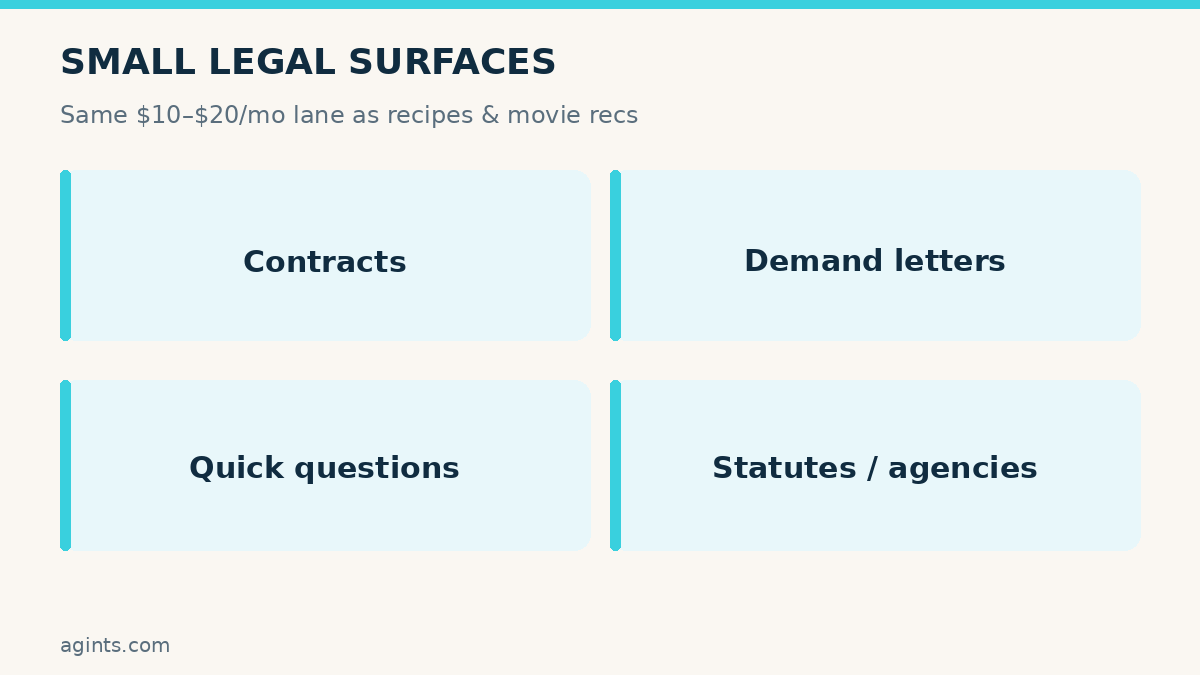
Small Legal is a fantastic use case for 20 bucks a month at a bare minimum — right along with the chocolate chip cookie recipes, the movie recommendations, and the other mainstream stuff that comes with a $20 plan. The best part is you can actually do legal research that prevents you from getting into a bad situation, or from signing a contract that puts you in a disadvantaged position, or that surfaces the basic little things about life that we interface with: government and agencies, other businesses, contracts, workplace.
All of those surfaces have legal liability, risk, all types of exposure. That can be handled by summarizing the knowledge of the internet and putting it before you in a beautiful summary.
The $10–$20 base case — frontier not required
That’s my base case for AI going forward: everybody who’s working should be able to afford a $10 or $20 a month plan.
Do you need a frontier model for that? Probably not. We don’t need Astra, Fable, Opus 5.5-level firepower to answer a lot of legal questions. You could download a very good Chinese model — DeepSeek, GLM, or Kimi — put it on a Mac worth $3,000 to $5,000, and have up-to-date legal firepower on your machine without firing off an email and paying $150 to $500 an hour for a broad, general answer that may or may not be that sharp.
Some of these attorneys are just doing their Google research, putting their name behind it, and signing it. With no disrespect to the attorneys in the legal industry — that’s sometimes what goes into billing you $150 or $200: looking things up in LexisNexis, a broad sweep, a quick skim, copy-paste that into the law, and give you their interpretation. It’s the fast five-minute way of generating $150 to $200 in revenue when they get 20 or 30 minutes to check their email and make a few bucks here and there. There’s nothing wrong with that. The firepower you get with these models in the legal world is the part I wanted to put on the table.
So if you haven’t tried it out: I’m not asking you to get spicy and start introducing legal liability or contract risk into your life. It is definitely an area worth exploring. These models have gotten incredibly good at it.
Grok 4.7 and agents that multi-step the letter
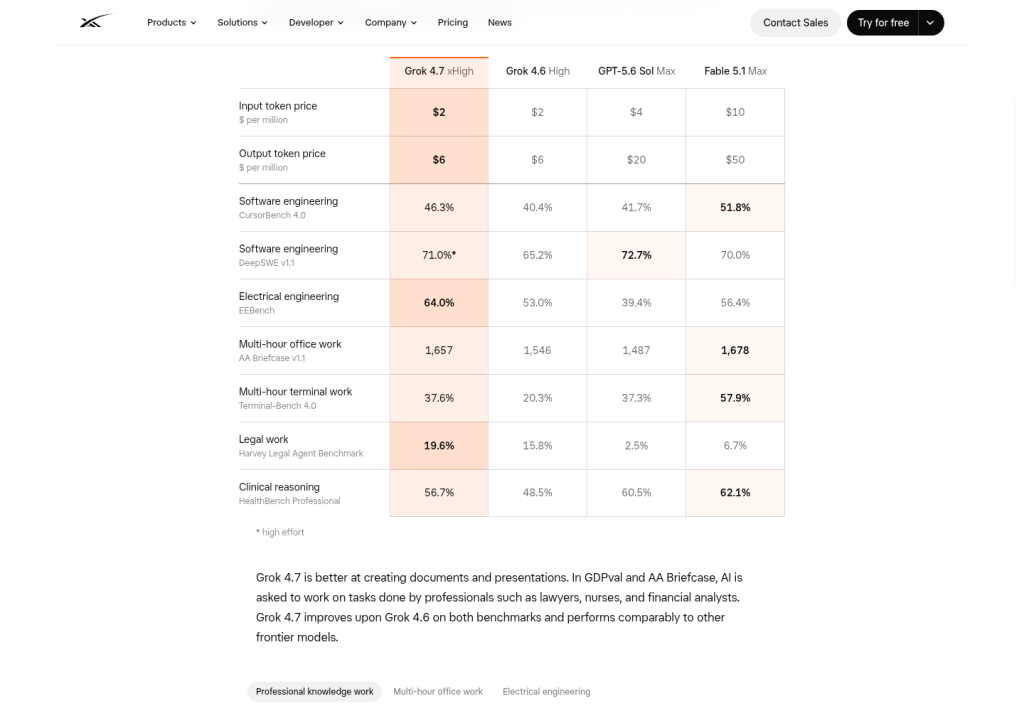
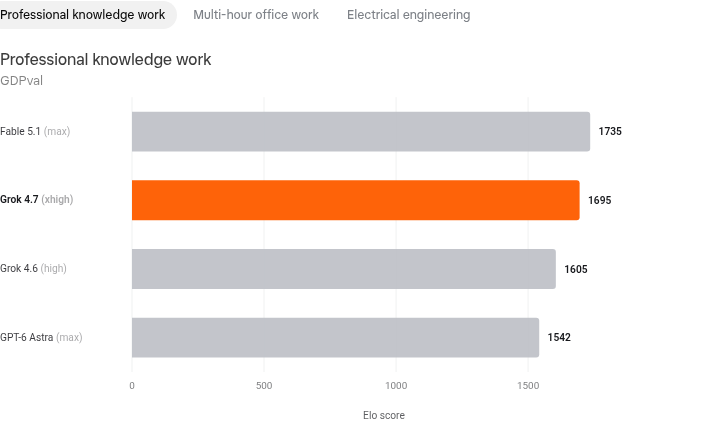
Notably, in September 2026, Grok 4.7 is scoring very high on legal research compared to the other frontier models. On Harvey’s Legal Agent Benchmark, it’s clearing Opus 5.5 and Astra by a wide margin — the kind of gap that shows SpaceXAI leaning hard into legal as a way to separate from the pack. It’s kind of one of the things Elon has been leaning into — customer service and legal — to differentiate into industries that will have a lot of AI research needs. This is a quick one I wanted to make — and why the future looks very bright for AI in 2027.
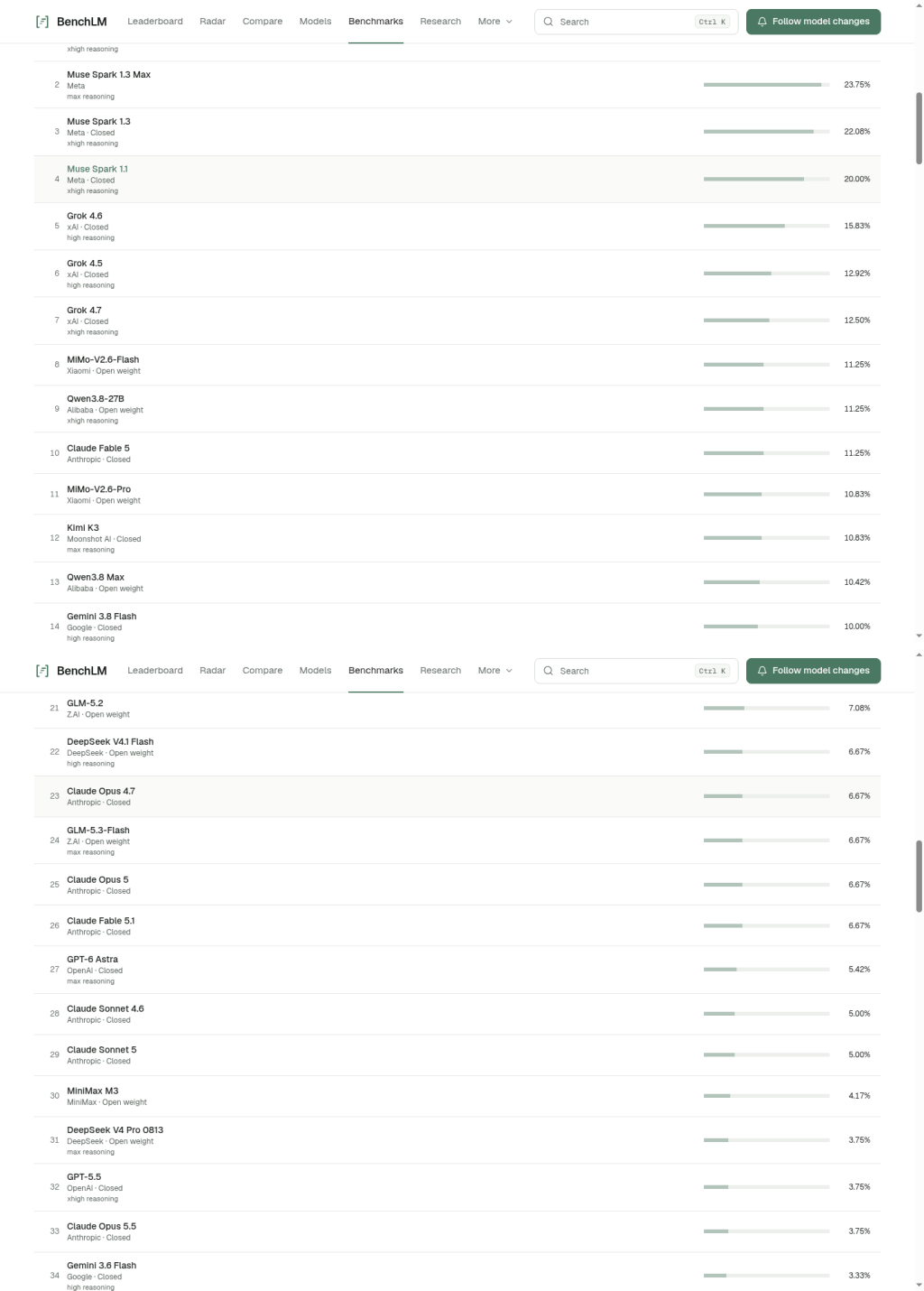
Also: one of the great things about AI pertaining to agents in the legal world is that agents can multi-step their way into contract preparation, letter preparation, and the other basic fundamentals. That is the same stack that drafted my demand letter, carried contract review through the year, and helped stop my family member’s accident dispute before it became a long, expensive case.
Quick weekend read.
If you want a free evaluation of where agents could cut cost, time, and busy work in your work, office, or business — meet Gini at agints.com/free. No credit card needed.
More at agints.com.
Mike Rodriguez, CTO
Want work to keep moving 24/7 while your laptop’s closed? Easy setup. Installing business agents since 2024. agints.com